The use of a bank’s safe deposit box for jewelry storage is undoubtedly one of the brilliant ways to keep your jewelries safe. It helps you to keep your items directly secured from robbery which your home often cannot do.
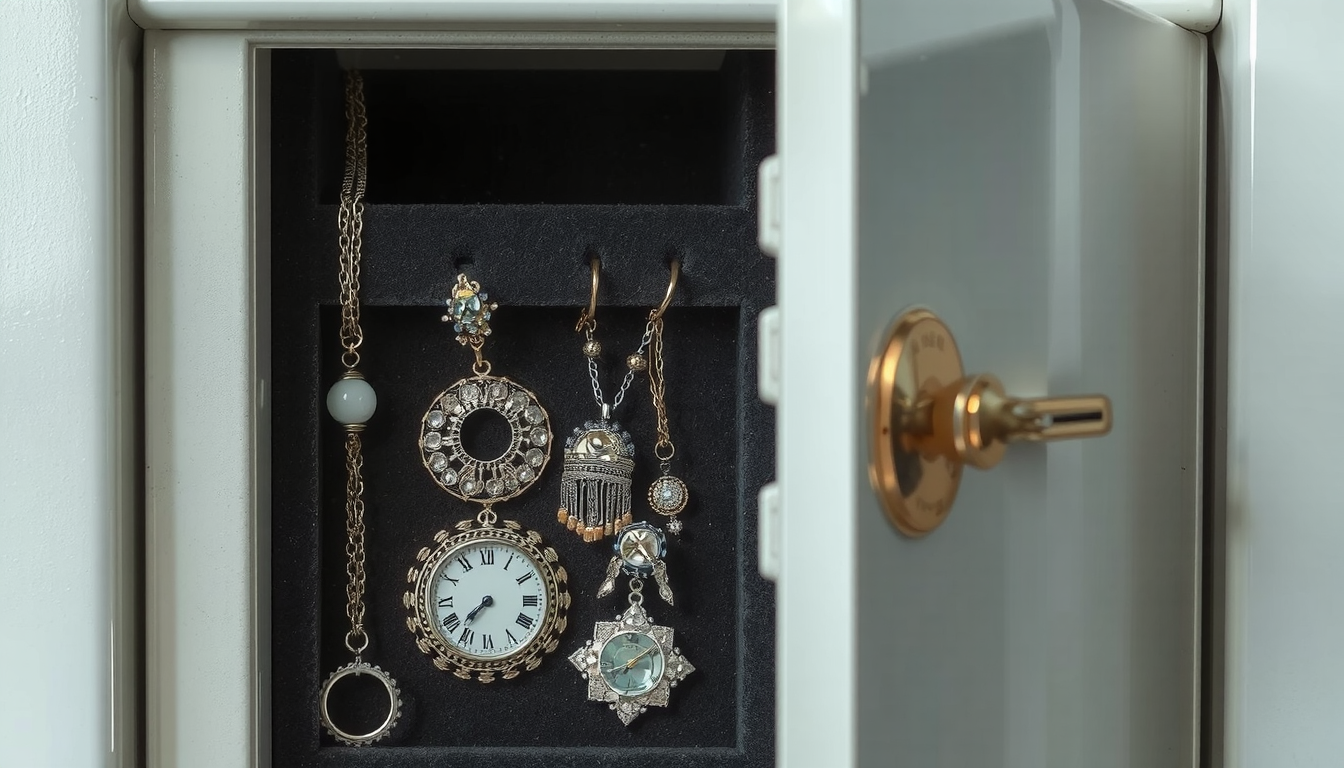
However, security is only part of the story. Inadequate care of jewelry item causes it to be damaged. For example, you may find scratches, tangled chains, or tarnish silver when returning your items.
This article discusses how to store jewelry in a safe deposit box. These steps are the easiest way to keep your heirlooms and investments in pristine condition. Thus, this will ensure their beauty and value for many years.
Step 1: Essential Preparations Before You Visit the Bank
You should do a few things beforehand before putting any items inside the safe deposit box. These steps are essential for documentation and insurance. They will protect you in case of any unforeseen events.
Create Prominent Inventory
First, make an exhaustive list of the items you want to put in the safe. This document will serve as prima facie evidence for confirming the contents of the box. Your list should give a description of the item, the date you got it, the cost it was, and some good-quality photos or videos.
Use a simple table as tracker for your inventory.
| Item | Description | Appraised Value | Photo File Name |
|---|---|---|---|
| Ring | 1.5ct diamond, platinum band | $12,000 | Ring_01.jpg |
| Necklace | 18″ gold chain with pearl | $1,500 | Necklace_01.jpg |
| Watch | Stainless steel, brand name | $5,000 | Watch_01.jpg |
Get a Professional Appraisal
For the items with high value, you should get an appraisal from a qualified professional and the appraisal must be current. An appraisal is a document a licensed professional provides stating the present value of your jewelry in the market. This is a key document for getting the proper insurance coverage.
Store a digital copy of the appraisal report securely in the cloud. Keep the original paper copy at home. Under no circumstances, place it in the safe with the jewelry or anything else.
Review Your Insurance Coverage
This is the most critical factor in your preparation. Regular homeowner’s and renter’s insurance often come with very low coverage limits specifically for jewelry. This is generally about $1,500 to $2,500. It won’t be enough to cover your precious collections.
You’ll need to add a “jewelry rider” or “floater” to your policy. This will cover your jewelry for its entire appraised value.
The bank does not insure the contents of a safe deposit box. Also, according to the FDIC, these items are not included in its protection. Thus, if the bank is broke down by fire, flood, or robbed, you could lose everything if you don’t have your own insurance.
Step 2: Choosing the Right Packing Materials for Maximum Protection
Like the box is a loving home to your jewelry, so is the packing. The right materials prevent physical damage and chemical reactions such as tarnishing. Learning to store jewelry in a safe deposit box begins with the right supplies.
The core rule is “keep them apart.” When metal rubs against a gemstone or another piece of metal, it causes scratches. Hard gems like diamonds can easily scratch yellow, golden, and softer stones.
Recommended Materials
- Acid-Free Tissue Paper: Use this to wrap each item. It is soft and is chemically neutral. It will not cause tarnish or color changes over time.
- Soft Fabric Pouches: Small pouches made of velvet, suede, or silk are so cute for single items. They are most suitable for earrings, pendants, and brooches. They act like a soft cushion.
- Individual Zip-Top Bags (with caution): These are good for preventing tarnish on sterling silver. Air gets in. But first, you must ensure the jewelry is completely dry. Wrap it in acid-free tissue paper first. Trapped moisture can cause the jewelry to be damaged.
- Travel Jewelry Rolls: These are great for organizing necklaces and bracelets. They have loops and compartments that keep chains from tangling.
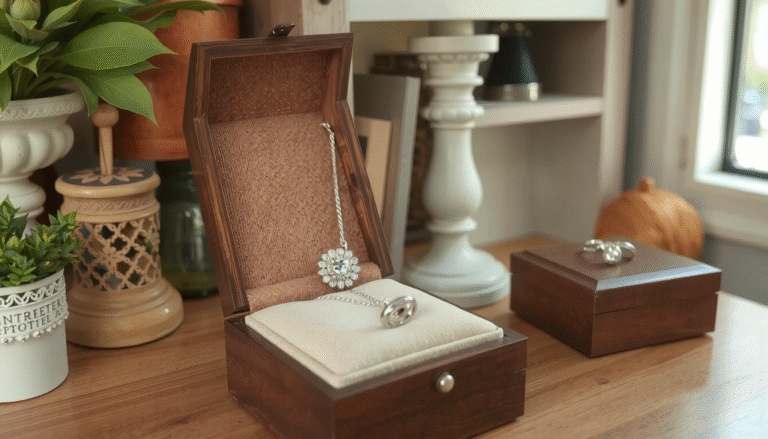
- Compartmentalized Jewelry Trays or Boxes: If your safe deposit box is big enough, those two are the best option. A professional jewelry box manufacturer designs these with individual, soft-lined slots. They present the best jewelry protection and good organization.
What to Avoid
Stay clear of materials that can do damage to your treasures. Don’t use ordinary plastic bags, which create moisture and ethnie. Standard paper towels can be rough. Never just throw all your jewelry in one big bag or box.
Step 3: The Professional Packing Method: A Step-by-Step Guide
As the jewelry professionals, we trust this method for storing high-value jewelry. It is a slow and steady procedure that ensures each item is safe and found easily. This is basically how to store jewelry in a safe deposit box correctly.
Pre-Packing Cleaning and Inspection
Before you pack, clean every piece of jewelry carefully. Use a soft cloth and the right cleaner for different metals and gemstones. Most of all, make sure the items are completely dry before you wrap them up. Any moisture left behind can cause tarnish or water spots.
How to Pack Necklaces and Chains
Tangled chains are common. Here are two simple ideas to stop that.
- Method 1 (The Straw Trick): Unclasp the necklace. Turn one side of the chain through the drinking straw. Clasp the necklace shut. Thus, the straw keeps the chain straight.
- Method 2 (The Roll): Place the chain flat on a sheet of acid-free tissue paper. Carefully roll the tissue paper up with the chain inside. Keep this roll in a pouch.
How to Pack Rings and Earrings
Pair of earrings can easily be lost if not kept together. Small, soft pouches are perfect for it. As for the rings, they are best placed in their original ring box, especially those with large stones such as the engagement ring.
If the number of rings you are storing is too much, you should look for the padded slot trays. For the bulk storage and the best protection, velvet jewelry boxes wholesaleprovide the individual, cushioned slots.
How to Pack Bracelets and Watches
Wrap bracelets with a thin piece of cloth, or in some cases put them in a bigger bag. When it comes to watches, especially those with leather or metal bands, a watch pillow or the original case is the best choice. It helps the band keep its shape, and protects the watch face from scratches.
Special Care for Delicate Items (Pearls and Opals)
Some organic gems require special care. Pearls, opals, and ivory need to be stored at normal humidity since they contain small amounts of water. They need “breathing,” to stay healthy.
Do not keep these items in airtight plastic bags for a long time. Instead, it’s better to use breathable fabric pouches such as silk or velvet. As some jewelers and metalsmiths point out, the very dry, air-conditioned environment of a bank vault can potentially dry out certain organic gems over many years.
Final Organization within the Box
After you have wrapped everything, arrange it systematically inside the box. Place the heavier and sturdier items like watches in cases at the bottom. Arrange the lighter and delicate pouches and rolls on the top.
Try to arrange the items so that they are easy to recognize. Finally, place a printed copy of the inventory list right on top. Thus, you can check easily all the enclosed items when you open the box.
Step 4: Placing and Managing Your Jewelry in the Box
With your jewelry properly packed, the final steps involve managing the safe deposit box itself. A few extra considerations will complete your secure storage plan.
Choosing the Right Box Size
When you rent a box, go for the one that is a little bit more than your space expectation. Correct size is the first thing to consider. A bigger box keeps you from cramming everything in one space. This, in turn, could create damage despite your careful packing.
Controlling the Environment
Even though bank vaults are climate-controlled, you can take extra steps. Just add one or two small silica gel packets to the box. These packets will absorb any extra moisture that might enter the box. This will help prevent tarnish.
For the items made from sterling silver, you can also put the anti-tarnish strips or cloths in the box. These will absorb air pollutants that make the silver darken. This step is a vital part of the long-term jewelry storage.
Access and Retrieval
Decide who should have access to the box. You can name an authorized co-signer, but choose this person carefully.
Keep your key in a very secure and separate location. Do not label the key with the bank’s name or the box number. If the key is lost or stolen, this prevents a thief from knowing where to go.
Safe Deposit Box vs. High-Security Home Safe: A Quick Comparison
Most people ask whether to use a safe deposit box or a high-security home safe. The choice ultimately depends on how often you need access to your items, how much you’re willing to spend, and how high the value of the goods is. Recognizing the trade-offs assures you that a bank box is indeed what you require.
Here is a brief comparison to assist your decision.
| Feature | Safe Deposit Box | High-Security Home Safe |
|---|---|---|
| Security | High (Bank vault-level) | Varies (Depends on rating, installation) |
| Accessibility | Limited to bank hours | 24/7 |
| Cost | Annual rental fee ($50 – $500+) | High upfront cost ($1,000 – $10,000+) |
| Desaster Prot. | High (Fire, flood resistant) | Varies (Must buy fire/waterproof model) |
| Privacy | High (Bank has no record of contents) | Absolute (Only you know contents) |
Conclusion: Your Valuables, Secured for the Future
Correct jewelry storage is not only about security, it is more about preservation. By adhering to these, you can keep your treasures from theft and damage.
The secret of how to store jewelry in the safe deposit box is Prepare, Pack, and Protect; those are the three words. Following those additional steps, your treasures will be safe and passed on to the next generations in beautiful condition. A professional jewelry box supplier can give specific solutions for optimal storage.
Frequently Asked Questions (FAQ)
1. Is it better to store jewelry in a safe deposit box or a home safe?
This decision comes down to your needs. A safe deposit box provides more security from theft but is only accessible during bank hours. In contrast, a high-quality home safe guarantees you 24/7 access but necessitates high initial costs and proper professional installation before being secure.
2. Will my jewelry be insured in a safe deposit box?
No. Your box’s contents are not insured by the bank or the FDIC. You must secure your insurance which is usually a “rider” or “floater” on your homeowner’s or renter’s policy. This insures the items for the full value against loss, theft, or damage.
3. Can the bank’s dry environment damage my jewelry?
Most items like gold, platinum, and hard gemstones are fine in the environment. Nevertheless, the low humidity can have adverse effects on organic gems like pearls, opals, and ivory over a span of decades. To mitigate this risk, store them in breathable fabric pouches, not in airtight containers.
4. What happens to my jewelry if the bank is robbed or has a fire?
Without your personal jewelry insurance, it is most likely a total loss. Banks are barely liable and this is why your own insurance is a must.
5. How much does a safe deposit box for jewelry typically cost?
The price varies depending on the bank, its location, and the size of the box. A small box (e.g., 3″x5″) could serve a modest collection for about $50 and $100 a year, while large boxes for extensive collections may cost far more.