A safe deposit box is an effective way to keep your valuable and sentimental jewelry safe. It protects your pieces from theft, fire, and loss at home. Such security is achieved very few places.
Nonetheless, it’s not just a matter of throwing your valuables in a steel box and locking it. The truth shows that there is more than just locking a box. It involves a systematic approach with several steps. You have to consider how to pack them to avoid any damage. Your knowledge of the fact that this storage method has certain limitations is also necessary.
This complete guide comprises all the essential information you need to follow. The guide first answers the advantages and disadvantages. Then, it gives you the procedures for preparing and packing your possessions appropriately. Finally, it introduces you to the concepts of insurance and bank policies. The process of learning the right methods of storing jewelry in a safe-deposit box is really a stress-reducer.
Is a Safe Deposit Box the Best Option?
 Safe deposit boxes are great security measures, but they’re not suitable for every type of jewelry or dealing with every person. The accommodation is a trade-off of very high security for less usability.
You should learn the advantages and disadvantages first. Only then can you tell if this storage solution meets your requirements. Only jewelry that you seldom wear can be securely placed in a safe deposit box. For example, consider art pieces or your kid’s jewelry that was passed down to you.
| Pros | Cons |
|---|---|
| Unmatched Security: Banks provide vault-level security with video cameras, strict access protocols, and extra protection from home-based threats like theft and fire. | Limited Access: It will be an issue for you if your jewelry is not something you frequently wear since your access is only allowed during bank hours. |
| Privacy: The content of your box is 100% private. The bank doesn’t keep track of what you put inside. | Not Insured by Bank/FDIC: The contents of the box do not have insurance coverage from either the bank or the FDIC. Separate insurance coverage must be arranged. |
| Cost-Effective Security: Renting a box is usually a lot more affordable than buying and setting up a high-end, insurance-rated home safe. | Potential Environmental Damage: The dry, climate-controlled air and delicate materials like pearls or opals can be harmed if not packed properly. |
| Inconvenience: Inaccessibility occurs through a trip to the bank, which raises the time needed. |
Despite their demerits, safe deposit boxes are still a very smart point to use for protecting what cannot be replaced.
The Critical 4-Point Preparation Checklist
Before you go to the bank, you need to get ready in a systematic way. These steps will cover you by documenting, protecting, and insuring your valuables. This preparation is an integral part of learning how to store jewelry in a safe deposit box.
1. Create a Detailed Inventory
The main document is a master list, be sure to make one. Your personal record is equivalent to it. That is why it is very valuable for insurance claims. Keep the original at your home. A copy in secure cloud storage is advisable.
You should make your inventory as descriptive and informative as possible.
| Item Description | Purchase Date | Purchase Price | Appraised Value | Identifying Marks | Photo ID |
|---|---|---|---|---|---|
| 1.5ct Diamond Solitaire Ring, Platinum | 06/15/2018 | $12,500 | $15,000 | GIA #12345, “J&M” inscribed | IMG_001 |
| Antique Sapphire Brooch, 18k Gold | Inherited | N/A | $4,500 | Small chip on lower facet | IMG_002 |
| Sterling Silver Link Bracelet | 12/01/2021 | $450 | $450 | “Tiffany & Co.” hallmark | IMG_003 |
2. Photograph and Video Everything
It is undeniable that visual proof is very strong. Capture clear pictures of each item well-lit and over a plain background.
This should be done in the presentation of each angle. You need to make sure that you pay attention to details like unique features, hallmarks, or inscriptions. A video that is filmed slowly can also be very beneficial for documentation.
3. Get Professional Appraisals
An appraisal does the work of certifying an objective value of your jewelry. Therefore, the right amount of insurance is achieved.
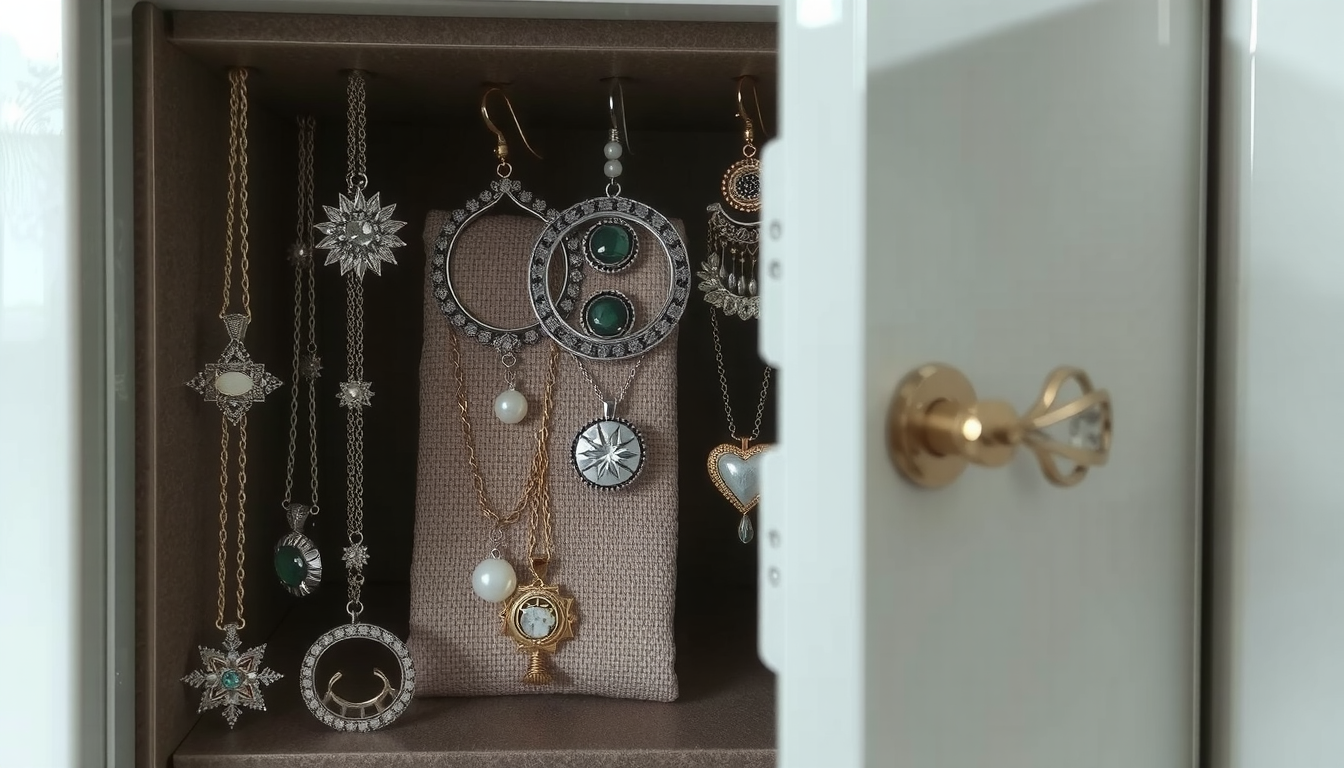
It’s important to know how replacement value and fair market value are different. Replacement value is the price of a new similar item whereas fair market value is the price you can get. Generally, insurance companies based their assessments on replacement value. You should keep a hard copy of the appraisal at home. A digital scan would be good.
4. Secure the Right Insurance
Most people’s understanding of this step problems is that they think the FDIC insures the contents of their safe deposit box. The bank does not insure your personal items either; you must do all the insuring yourself.
There are two types of insurance you can have:
- Scheduled Personal Property Rider/Floater: This is an extension of your homeowner’s or renter’s insurance policy and lists each item with its appraised value individually. Therefore it offers more coverage than a general policy would.
- Standalone Jewelry Insurance Policy: Some companies provide plans exclusively for jewelry. These often provide comprehensive protection against loss, theft, and damage, as well as mysterious disappearance.
You should talk to your agent before keeping the jewelry in the box. They will provide you with the best choice. In addition, they might offer lower prices for the items that are stored in a bank vault.
How to Pack Jewelry in Safe Deposit Box
Packing well is much more than just staying organized. It’s critical for keeping your jewelry in top condition. Your choice of materials and methods can inadvertently cause scratches, tangles, or long-term damage to delicate gems. This is the primary reason you need to master the right methods for storing jewelry in a safe deposit box.
The Golden Rules of Packing
Stick to these basic principles before you even start wrapping. They are essential for successful long-term storage.
- Clean First: Ensure to clean each piece gently to get rid of oils and residue. Most importantly, each item must be completely dry before packing. Moisture that is trapped can cause tarnishing and damage.
- Separate Everything: Metal components should never contact each other or gems that cause scratches. Individual pieces must have their own space.
- Use the Right Materials: Soft, safe materials are the better choice. Acid-free tissue paper, unbleached cotton pouches, and anti-tarnish cloths or strips for silver are excellent.
A well-organized system is vital for Securing Precious Gems. It will prevent damage and also make getting the items out much easier.
Packing Techniques for Different Jewelry
Experience shows us that using only one method for everything is not effective. Match the packing method according to the type of jewelry.
- Necklaces & Bracelets: Don’t double twist chains to prevent severe tangling. Place them flat between the sheets of acid-free tissue paper inside a jewelry roll or a long folder. Alternatively, you can also put each chain in a narrow plastic bag, leaving the clasp outside the seal so as to keep the chain straight.
- Earrings: The best way to store earrings in a safe deposit box is by keeping them paired together but separated. One way is to place each earring in a tiny ziplock bag or separate compartment of a small pill organizer. Place the pair into another pouch.
- Rings & Brooches: A compact ring box is good for the slots in it. If one isn’t available, wrap rings or brooches individually in soft cloth or acid-free tissues. Then, the two inside a sturdy container.
Special Care for Delicate Materials
All jewelry does not have the same needs. There are organic crystals and some stones that can be hurt by the environment of the vault. This is a risk that expert jewelers point out.
- Pearls, Opals, and Amber: These organic gems are composed of water. They require a particular level of humidity to remain shiny, and to prevent themselves from cracking. The extremely dry, air-conditioned atmosphere of a bank vault can be detrimental to them over many years.
- The Solution: Don’t store these items in sealed plastic bags. These might trap the moisture that is detrimental if the temperatures fluctuate. Instead, use breathable fabric pouches. To achieve minimal humidity, you can place a small, clean piece of natural sponge that is only slightly damp inside a separate, perforated container within the box. At least once a year, ensure to check the condition of these delicate items.
Choosing Your Storage Containers
Opt for containers that are compact, stackable, and fit well inside the limited area of a safe deposit box. This way, you will not waste any space, and you will feel snug and organized.

Using durable storage is a game changer for both security and organization. For premium quality, you can check specialized jewelry boxes or pouches which are made for safe, compact, and ordered storage in a small area.
Finalizing the Process: At the Bank
The last steps are simple once you have prepared and properly packed your jewelry. Knowing a little about the bank process will help make your visit not only swift but also easy.
Choosing the Right Box Size
Banks normally have different sizes from small 3×5 inch boxes to huge ones. Start with a small size and the one you want; you will always have the option to change to a bigger one later. Be mindful of the bulk of your packaging material when choosing a box size, not just the jewelry itself.
Understanding Access and Authorization
 You will sign a rental contract and obtain one or two keys. The bank will serve you with “guard key” protection. The guard key, your key, and the bank’s key are needed for unlocking the box.
Think very well if anyone else should get access or not. Including a spouse or a trusted family member will be beneficial for either a backup access or estate planning.
Your Visit to the Vault
The procedure is designed for maximum security. You will show identification and sign an entry log. A bank employee will escort you to the vault, use the guard key to release the lock, and then leave you in a private viewing room to access your box’s contents.
Frequently Asked Questions
If you have any questions concerning how to store jewelry in a safe deposit box, here are some answers.
1. Is there any insurance for my jewelry with the bank or FDIC?
No, this is a critical and common mistake. Your contents in a safe deposit box are not insured by the bank or the FDIC.For this, you will need to your own insurance coverage. This could either be through a rider on your homeowner’s policy or a separate, specialized jewelry policy.
2. Can the vault environment damage my jewelry?
Yes, it is possible. Bank vaults are climate-controlled and extremely dry. This is good for metals and hard gemstones like diamonds and sapphires. But it can harm organic gems like pearls, opals, or ivory over time. You must pack these items carefully to keep some moisture and check them regularly.
3. How much does a safe deposit box cost?
Prices differ a lot according to occupying the bank’s location and the size of the box. A small box measuring 3×5 inches could go for $50-100 yearly, while larger boxes can cost several hundred dollars each year. Calling a few local banks or credit unions to check the prices and availability would be a good approach.
4. What should I do if I lose my key?
Call your bank at once. You will be required to show identification to prove you own the box. The bank will then hire a specialized locksmith to access the box. You will have to pay for this service, which might be significant, and often exceeds $150.
5. What items should I avoid storing with my jewelry?
Do not store anything that is an emergency necessity or a document outside the banks’ hours; this includes passports, original copies of wills, powers of attorney, or medical directives. Do not keep cash, firearms, or any illegal or dangerous materials in the box. The best items to store in safe deposit boxes are valuables that are hard to replace and not needed in short notice.