Crafting a jewelry box is not just a project but a precious gift you will be able to pass on. If you are here to learn how to create jewelry boxes, we are glad to have you with us.
This is a universal guide. Both complete novices and young woodworkers can find a useful lesson here. Detail by detail, we will take you through the process. After the course, you will be so full of confidence to begin your first DIY jewelry box project.
Here are the key points of this guide:
- Planning your design and picking the right materials.
- Projects for every skill level, from easy to hard.
- A full step-by-step guide to build a classic box.
- Tips for professional finishing touches.
Before You Begin: Planning Your Perfect Jewelry Box
Good planning is the most important step. It saves time and helps you avoid mistakes. Taking time to plan makes your project successful. This is a key part of learning how to build a jewelry box.
Defining the Purpose and Design
First, think about what the box will hold. Will it be for rings and earrings? Or will it store long necklaces and bracelets? The type of jewelry helps you decide the size.
Think about the box’s shape and size. A box for rings that is small is completely different from a large one that has drawers.
You can opt for a simple design having a lift-off lid. Alternatively, you can try a more complex box that has drawers or removable trays. For your first project, simple is often best.
Get a pencil and paper. Sketch a simple drawing of your box. It doesn’t need to be perfect. A basic sketch helps you see your idea and plan your cuts.
Choosing the Right Wood
The wood you pick affects the look, cost, and difficulty of your project. Woods are either hardwood or softwood. Hardwoods (like oak and walnut) come from leafy trees and last long. Softwoods (like pine) come from cone-bearing trees and are usually easier to cut.
Here’s a simple chart to help you choose:
| Wood Type | Cost | Ease of Working | Grain Appearance | Finishing Notes |
|---|---|---|---|---|
| Pine | Low | Easy | Light color, visible knots | Can look blotchy with stain; best to paint. |
| Poplar | Low | Easy | Light green/white, smooth | Great for painting, but can be stained. |
| Oak | Medium | Harder | Strong, classic grain pattern | Looks great with an oil or varnish finish. |
| Walnut | High | Medium | Rich, dark brown color | Beautiful with a simple oil finish. |
For a first-time DIY jewelry box, poplar is a great choice. It costs little and is easy to work with.
Essential Tools & Materials Checklist
You don’t need a huge workshop to get started. Here’s what you need.
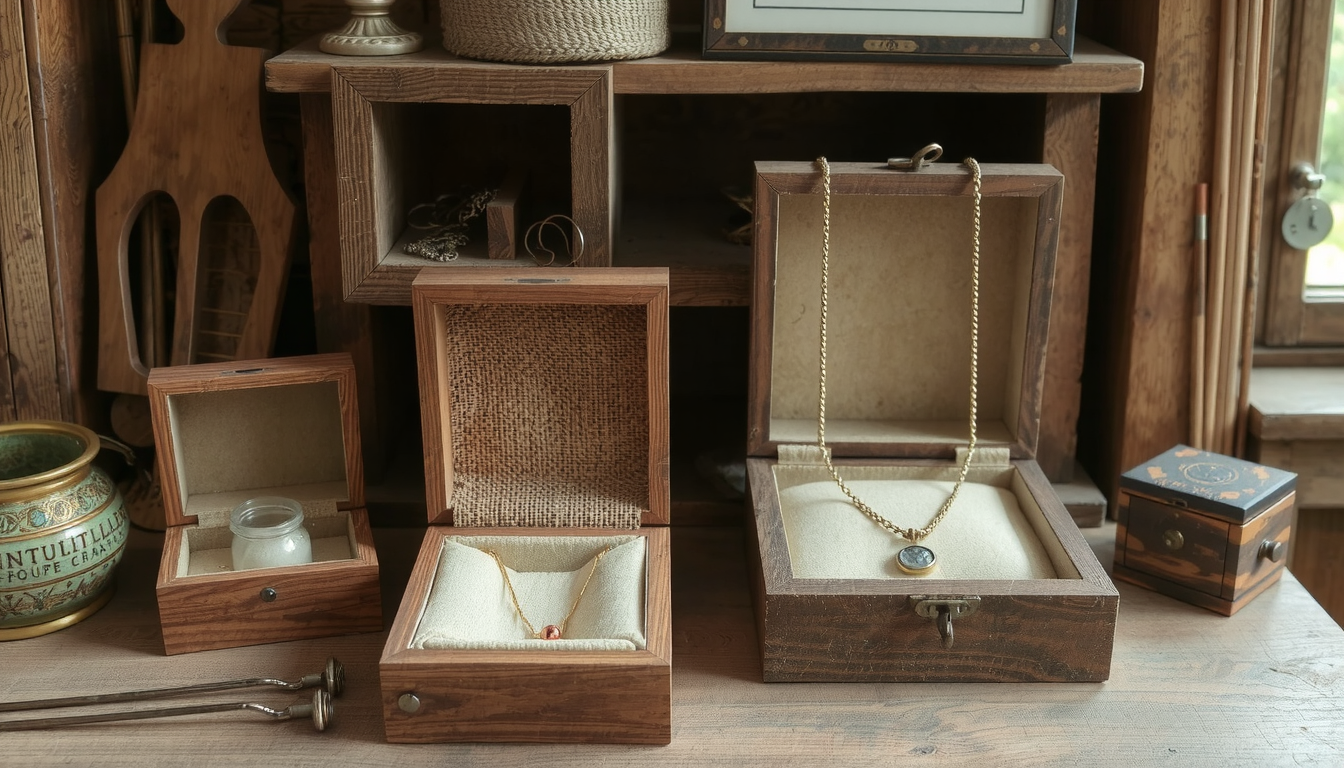
The Bare Minimum (for beginners):
- Hand saw and a miter box (for accurate angle cuts)
- Sandpaper (medium and fine grits)
- Wood glue
- Clamps
- Measuring tape and pencil
Upgrading Your Toolkit (for better results):
- Table saw
- Router
- Orbital sander
Materials:
- Wood of your choice
- Wood glue
- Sandpaper (grits from 120 to 220)
- Finish (oil, varnish, or wax)
- Hardware (hinges, clasp)
- Lining material (felt or velvet)
Choosing Your Path: Three Projects for Every Skill Level
Not all jewelry boxes are the same. This guide helps you pick a project that fits your tools and skills. This way, you can be sure to succeed.
Level 1 (Beginner): The Simple Miter Box
This is a classic, elegant box. It’s made with four sides cut at a 45-degree angle. These angled cuts are called miters. This project needs only a few tools but teaches you how to be precise.
You’ll learn how to measure carefully, cut miters, glue pieces together, and sand smoothly. This is the project we’ll build in the next section. It’s a perfect starting point for anyone learning how to build jewelry boxes.
Level 2 (Intermediate): The Box with a Tray
This project builds on the simple miter box. You’ll add a lift-out tray inside for better organization. This introduces new skills, like making smaller parts that fit snugly inside the main box.
You’ll learn to build inner parts and make sure everything fits just right.
Level 3 (Advanced): The Dovetail or Scroll-Sawn Box
Dovetail joints show high-quality woodworking. They’re strong and beautiful interlocking “fingers” of wood. A scroll-sawn box has very detailed, decorative patterns cut into the wood. These projects need more skill and special tools.
For complex designs like these, having a good plan is very helpful. You can find excellent Woodsmith Scroll-Sawn Jewelry Box Plans that show every step.
Finding More Inspiration
If you want to see other designs, there are many resources available. For those who want to explore a wide variety of designs, browsing a collection of 12 Free Jewelry Box Plans – The Spruce Crafts can spark great ideas.
The Build: A Simple Mitered Jewelry Box Step-by-Step
Now, let’s get building. We’ll walk through how to build a simple mitered jewelry box. Follow these steps carefully for a great result.
Step 1: Cut the Box Sides
First, cut your four side pieces. Remember the old rule: “measure twice, cut once.” It’s a good idea to cut your pieces just a little bit long. Then, you can trim them to the final, perfect size. All four sides must be exactly the same length for the box to fit together.
Step 2: Cut the Grooves for the Top and Bottom
You need to cut a thin channel, or groove, near the top and bottom edge of each side piece. These grooves will hold the top and bottom panels of the box. A router is the best tool for this. But you can also do it with a table saw. Make a few careful, shallow cuts to create the groove.
Step 3: Cut the Top and Bottom Panels
Cut two thin panels for the top and bottom of the box. These should be made from a thinner piece of wood or plywood. Measure carefully so they fit snugly into the grooves you just cut. They should not be too tight or too loose.
Step 4: The Dry Fit
This step is very important. Before you use any glue, assemble the box to see how it fits. Put the top and bottom panels into the grooves and bring the four sides together. This “dry fit” lets you check your joints. If anything is off, you can fix it now.
Step 5: Glue-Up and Clamping
Once you’re happy with the fit, it’s time for glue. Apply a thin layer of wood glue to the 45-degree mitered edges. A great tip is to lay the four side pieces flat, end-to-end, and put painter’s tape across the outside of the joints. Then, you can apply glue and “fold” the box up. The tape helps hold it together. Use clamps to hold the box tightly while the glue dries.
Step 6: Sanding the Box Body
After the glue is completely dry, remove the clamps. Now, sand the entire box. Start with a medium sandpaper (like 120 grit) to smooth out any uneven spots. Then, switch to a fine sandpaper (like 220 grit) to make it feel very smooth.
Step 7: The “Magic” Step – Separating the Lid
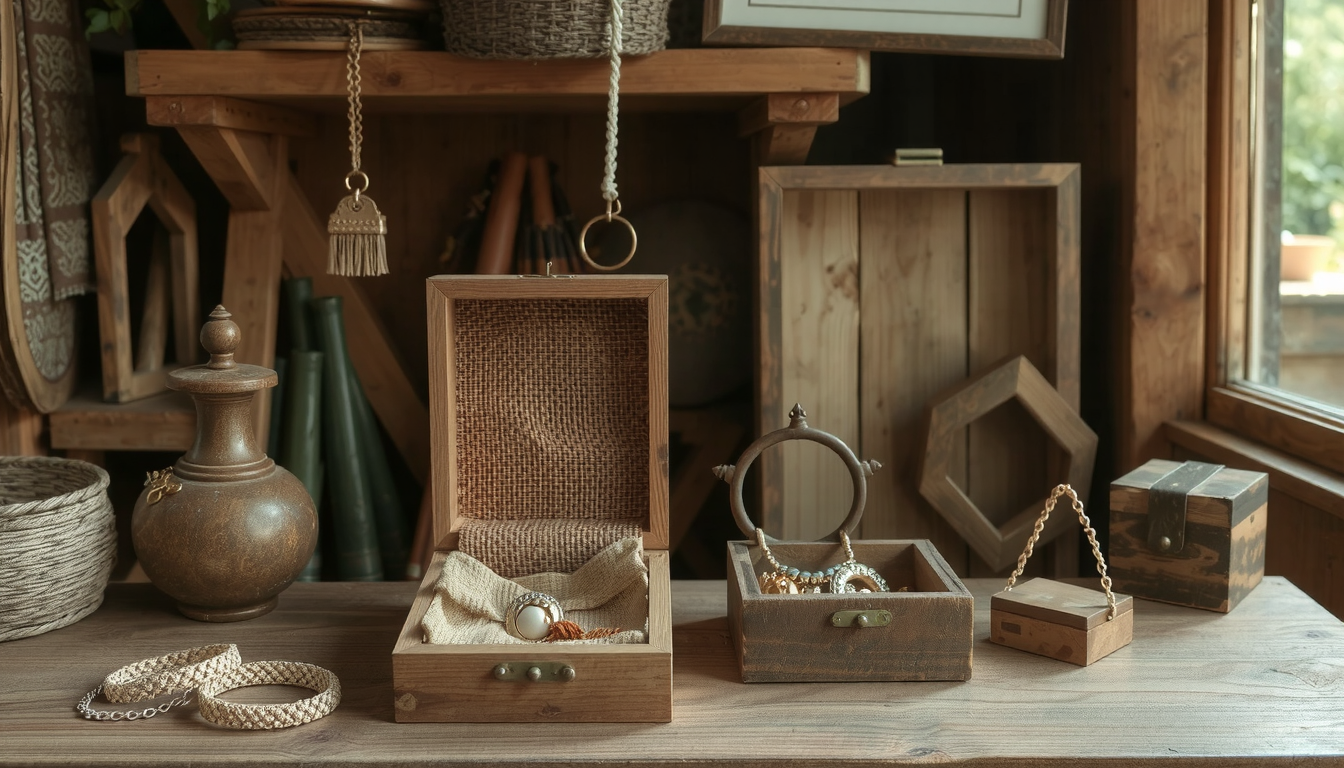
Right now, you have a sealed wooden box. It’s time to cut the lid free. Set your table saw blade to a low height, about 1 inch. Carefully cut all four sides of the box to separate the top part (the lid) from the bottom. Always be very careful when using a table saw. For a great visual of this process, check out this excellent step-by-step guide.
Finishing Touches: Elevating Your Handmade Box
The final steps turn a wooden box into a special treasure. These details add a professional look and feel to your DIY jewelry box.
Choosing and Applying a Finish
A finish protects the wood and brings out its natural beauty.
- Oil Finishes: Danish oil or tung oil are easy to apply with a rag. They soak into the wood and give it a natural, warm look.
- Varnish or Polyurethane: These create a hard, protective film on the surface. They come in different sheens, like matte (not shiny), satin, and gloss (very shiny).
- Wax: A simple wax finish gives a soft, smooth feel. It’s best for items that won’t be handled a lot.
Installing Hardware
Hardware is the “jewelry” for your box. Choose hinges and a clasp that match the size of your box. For a truly professional look, you can set the hinges into the wood so they sit flush. This is called mortising. Carefully trace the hinge, then use a sharp chisel to remove a thin layer of wood where the hinge will sit.
Lining Your Jewelry Box
Lining the inside of the box protects delicate jewelry from scratches. It also adds a touch of luxury.
A simple way to do this is with felt or fabric and spray adhesive. Cut the fabric to size and glue it to the inside walls and bottom.
For a truly premium result, consider high-quality materials. For those making multiple boxes or wanting the best, sourcing from a supplier of velvet jewelry boxes wholesale can provide the exact material used by professionals.
Don’t Have Time to Build? Exploring Professional Options
Learning how to build jewelry boxes takes time and practice. If you need a beautiful box right away, there are other options. Sometimes, the perfect gift is one crafted by a dedicated jewelry box manufacturer.
Exploring professionally made boxes can also give you great ideas for your next project. If you’re interested in the wider world of jewelry storage, a reputable jewelry box supplier can show you a huge range of styles.
Conclusion
Building your own jewelry box is a fun and rewarding journey. You’ve learned the basics of planning, cutting, assembling, and finishing. Whether you made a simple box or are planning a more complex one, you’ve gained valuable new skills.
Enjoy your beautiful new creation. You made it yourself, and that’s something to be proud of.
Frequently Asked Questions (FAQ)
What is the best wood for a beginner to use for a jewelry box?
Poplar is an excellent choice for beginners. It’s not too expensive, it’s easy to cut and sand, and it takes paint very well. Pine is another option, but it’s soft and can get dents easily. It can also look blotchy when you stain it.
How can I make a jewelry box without a table saw?
You can absolutely build a beautiful box using only hand tools. A good quality hand saw and a miter box are the key tools you need. They’ll help you make accurate 45-degree cuts for the corners. It will take more time and patience, but the results are just as rewarding.
What’s the best way to line a jewelry box?
The easiest method is to use cardstock or thin cardboard. Cut the cardstock to fit the inside walls and bottom of the box. Wrap these pieces in felt or velvet using a spray adhesive. Then, glue the finished panels into place inside the box for a clean look.
How do I get a perfectly smooth finish on my box?
The secret to a smooth finish is all in the sanding. Start with a medium grit paper (like 120), then move to a fine grit (220). Always sand in the same direction as the wood grain. After you apply the first coat of finish, let it dry. Then, lightly sand it with a very fine grit (320 or higher) before applying the next coat.
Can I sell the jewelry boxes I build?
Yes, many woodworkers turn their hobby into a small business. You can start by selling at local craft fairs or online. As you get better at how to build jewelry boxes, you’ll develop your own style. People often look for unique, handmade items to buy as gifts or for themselves.