Creating a gift with your own hands gives you a strong sense of achievement. A small wooden jewelry box is much more than a simple project. Not only will it be a keeper of your personal treasures, but it will also remain as a future family heirloom. With the help of this guide, you will go from material selection to the final polishing touch.
This tutorial was tailored to be comprehensive yet simple to follow for anyone, even if they are just starting. In this program, you will cover the topics of planning, building, finishing, and personalizing your wooden box. You can create a beautiful and practical wooden jewelry box using just basic skills and a little bit of patience.
Project Planning: Choosing Wood, Tools, and Design
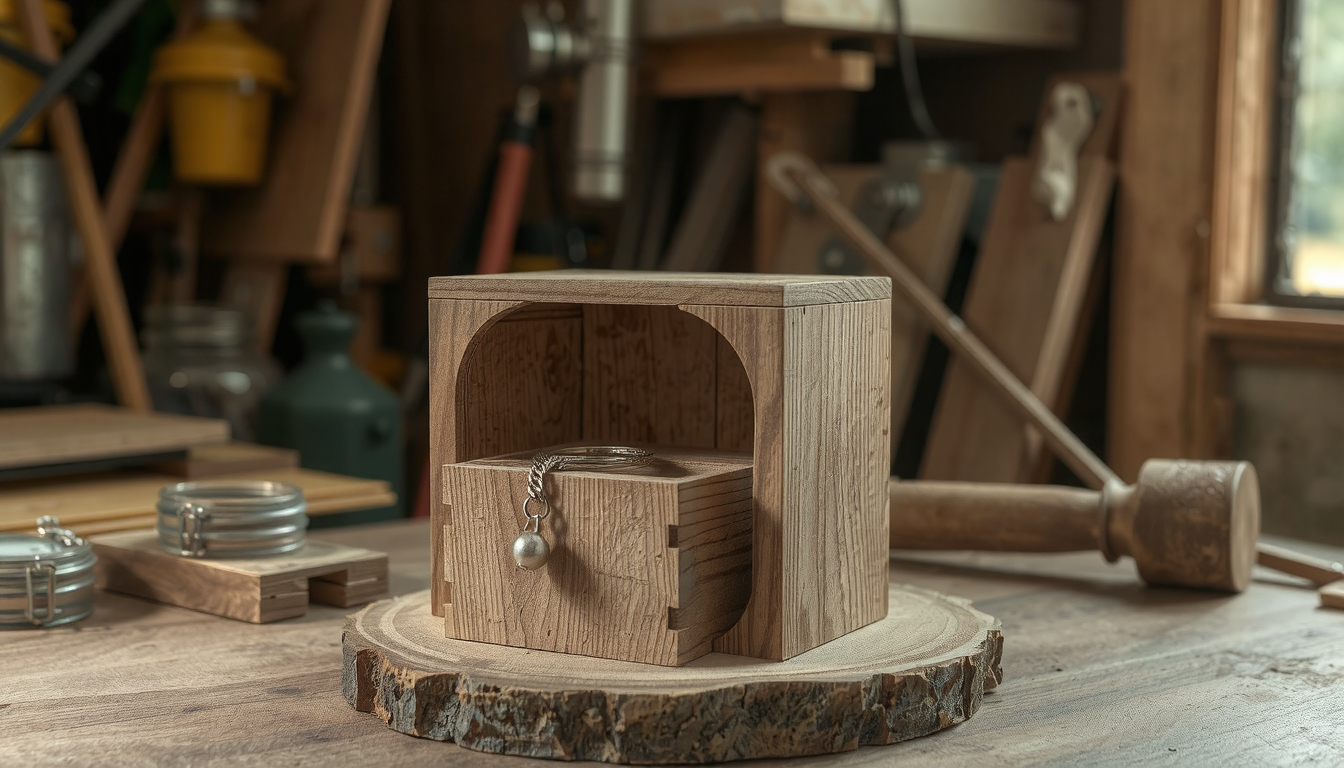 A good plan is the key to every woodworking project’s success. Spending time getting the supplies and setting your design right will make the whole process smoother. Making things becomes more fun when you avoid costly errors.
Ideal Wood Selection
The wood you select sets the jewelry box’s character. Hardwoods like oak, maple, and walnut are sturdy and attractive with amazing grain patterns. Softwoods like pine are cheaper and easier to work with for the first time.
| Wood Type | Cost | Workability for Beginners | Best For… |
|---|---|---|---|
| Poplar | Low | Excellent | A great all-around choice; easy to work with and takes paint beautifully. |
| Pine | Low | Good | A rustic look; very easy to cut but can dent easily. |
| Oak | Medium | Fair | A classic, durable box with a prominent grain pattern. |
| Walnut | High | Good | An elegant, high-end finish with rich, dark color. |
Required Tools and Materials
You can build an impressive box without the need for a professional workshop. Here’s everything you will need to launch your project.
Tools:
- Safety Glasses
- Tape Measure & Pencil
- Handsaw (Miter Box Saw or Japanese Pull Saw recommended) or Table Saw
- Wood Glue
- Bar Clamps or a Band Clamp
- Sandpaper (grits from 120 to 220)
- A sharp Chisel (for hinge installation)
Materials:
- Wood of your choice (approx. 1/2″ thick)
- Small decorative hinges
- A small clasp or latch (optional)
- Wood finish (oil, varnish, etc.)
- Felt or velvet for lining (optional)
- Cardstock (for lining)
Finding or Creating a Plan
Your first project should be easy. A good size for a small jewelry box would be about 8 inches long and 5 inches wide, and around 4 inches high. It will be enough space to store your trinkets and not too difficult to build.
You can draw a simple rectangular design all by yourself. In case you need more creative ideas, you can choose from an assortment of free DIY jewelry box plans available on the Internet. If you are ready for something tougher, there are many professional wooden jewelry box plans that provide more sophisticated designs and joining techniques.
The Build: A Step-by-Step Guide
It’s making time now as you have your materials and plan ready. We will break down the process of how to make a small wooden jewelry box out of wood into five easy steps.
Step 1: Measure and Cut Your Pieces
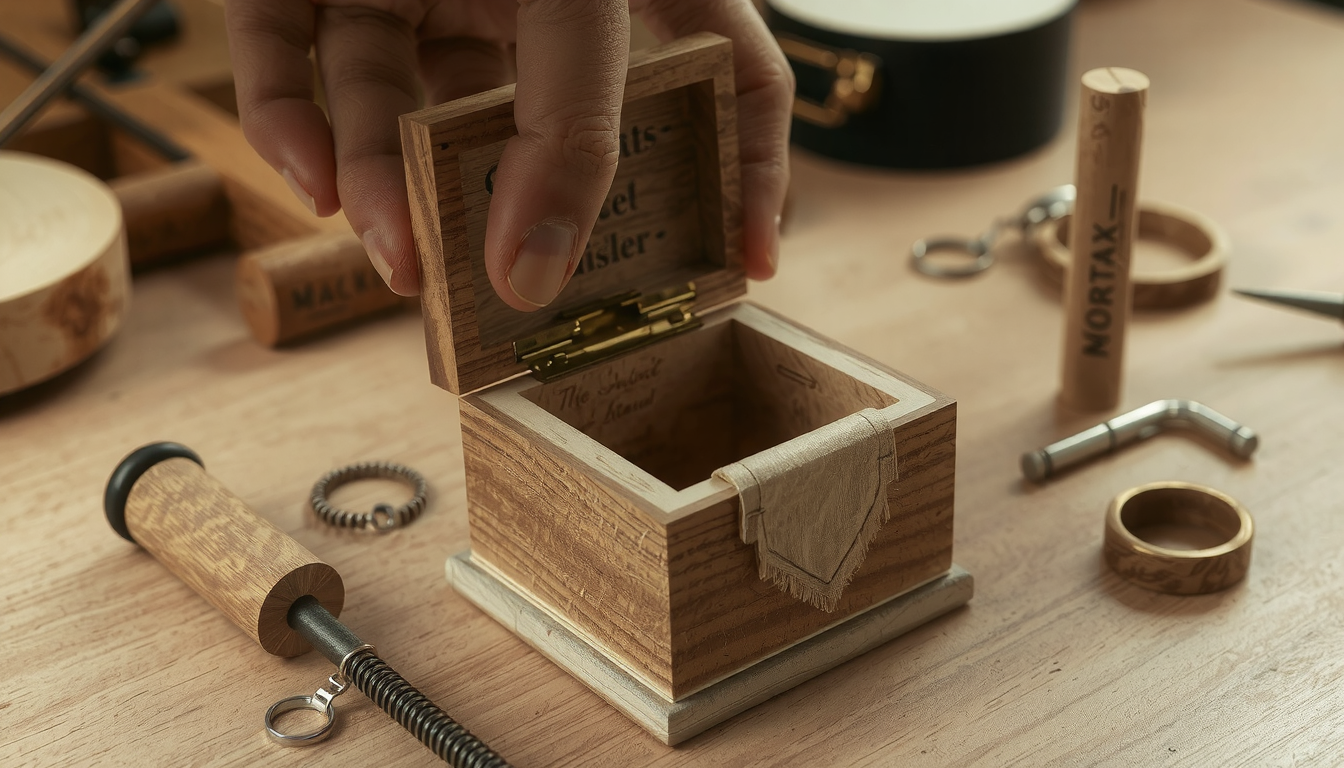
At this stage, precision is a priority. Using your plan, it is important to carefully measure and mark your wood for the four sides, top, and bottom. Keep in mind the classic woodworking rule: “measure twice, cut once.”
You need to ensure that your cuts are exactly square at 90-degree angles. This operation is very easy using a miter saw or a table saw. If you are cutting with a handsaw, a miter box will help attain even cuts.
Step 2: The Dry Fit and Glue-Up
Before jumping to the glue part, make sure to do a “dry fit”. Assemble the four sides without any adhesive to test if all joints fit snugly and ends are square.
Now that you are liking the fit it is time for the glue. Apply a thin, even bead of wood glue to the joint edges. Use only a small amount; a slight squeeze-out is okay, but too much glue only makes a mess without adding strength.
Unite the four corners of the box and use clamps to get them tight. Use a square to check that the corners are all 90-degree angles. This is the last time you can adjust the angles before the glue sets. With a damp cloth wipe away the excess glue from both inside and outside.
Step 3: Attaching the Top and Bottom
When the box frame glue has fully dried (consult the bottle for curing times, which usually are a few hours or overnight), you can proceed to attaching the top and bottom panels.
Add a thin layer of glue to the top and bottom edges of the box frame. Graciously place the panels onto the frame and use clamps to apply gentle and steady pressure evenly over it. Let the glue cure completely.
Step 4: The Magic Cut – Separating the Lid
This process is the one that makes your box’s lid the exact part of the box. You will cut the lid from the main body. It is easier and more accurate to perform this operation on a table saw.
Set your blade height to just slightly above the wood thickness so that you can cut cleanly all the way through. Painter’s tape along the cut line acts as a tear-out reducer and gives you a sharper line. Set your saw fence to the lid height (for example one inch from the top) and accurately cut the sides.
If you do not have a table saw, you can still use a handsaw, although it is hard to keep the cut straight and level. This illustrated box-making tutorial acts as a visual guide for the entire process.
Step 5: Sanding for a Professional Finish
Right sanding is the line that divides good projects from fantastic ones. Start by using lower grit sandpaper, like 120-grit, to get rid of tool marks and level joints where the lid and box meet.
Progressively move through finer grits. After 120-grit, go to 180-grit and finally 220-grit. This method removes the scratches from the previous grit, leaving a perfectly smooth surface. Make sure to sand all the sides both inside and out for a professional look.
【Unique Value Point】 A Guide to Joinery
Joining is the technique applied to hold wooden pieces together. While our basic guide introduces the butt joint, knowing more options can be the key to your next DIY wooden jewelry box.
| Joint Type | Description | Strength | Difficulty | Tools Needed |
|---|---|---|---|---|
| Butt Joint | Two pieces of wood joined end to edge. Relies entirely on glue. | Low | Very Easy | Saw, Glue, Clamps |
| Miter Joint | Edges are cut at a 45-degree angle to form a clean 90-degree corner. | Low-Medium | Easy | Miter Saw or Miter Box |
| Rabbet Joint | A groove is cut along the edge of one piece to accept the other piece. | Medium | Medium | Table Saw or Router |
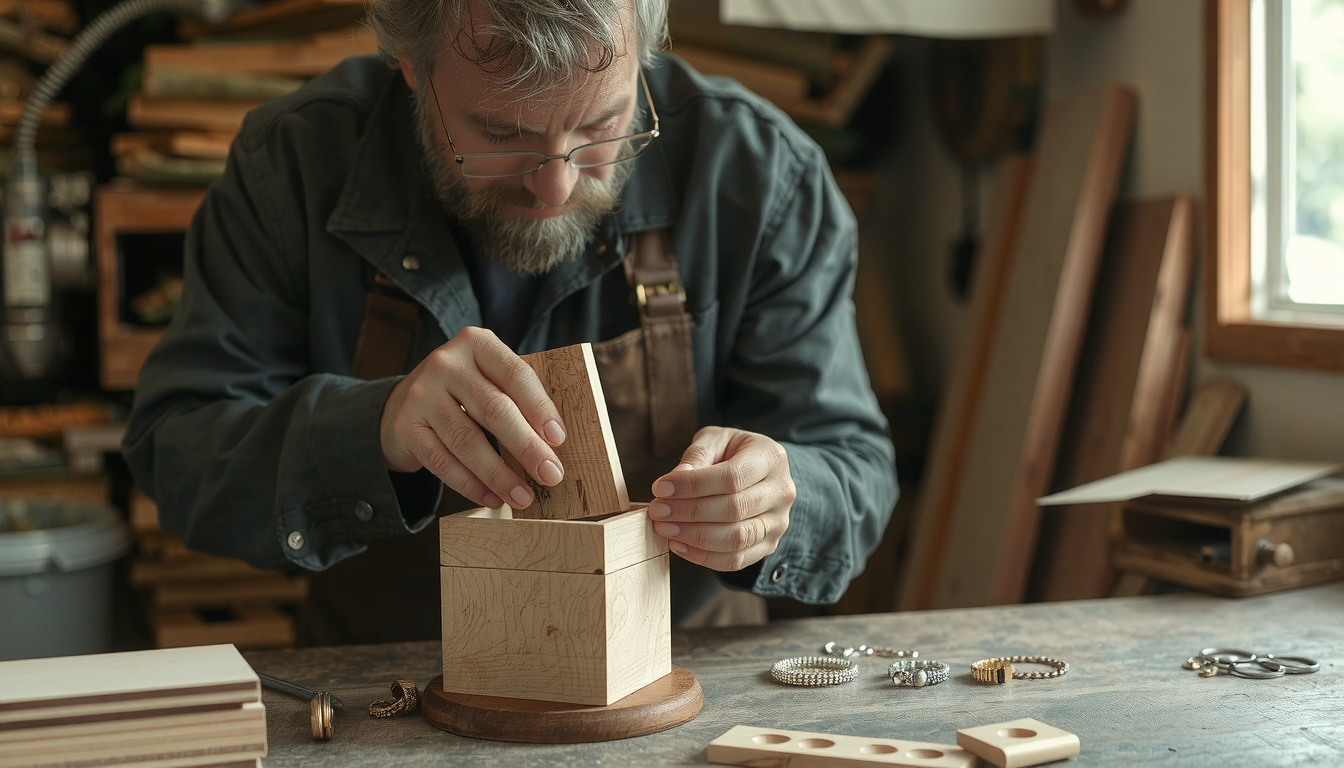
【Unique Value Point】 Finishing and Personalizing
The final sections are where you really stamp your authority on the project. Elements of the finish are both protection for the wood and enhancement of its natural beauty. The unique features that you add turn your box into an individual piece.
Applying a Protective Finish
Your choice will be a finish that looks the way you want and offers the level of protection you desire.
- Tung Oil or Danish Oil: These are finishes that soak entirely into the wood. They are easy to apply with a piece of cloth, get absorbed by the wood, and provide a natural, matte look and feel.
- Shellac: A traditional finish that dries promptly and gives the workpiece a warm amber look. It is less resistant than the other options but it is easily repaired.
- Polyurethane: A type of finish that forms a layer on the surface of the wood. It gives the wood the most protection from moisture and scratches and comes in satin, semi-gloss, and gloss sheens.
It is always best to put your chosen finish on in a well-ventilated place and to observe the manufacturer’s instructions.
How to Line a Jewelry Box
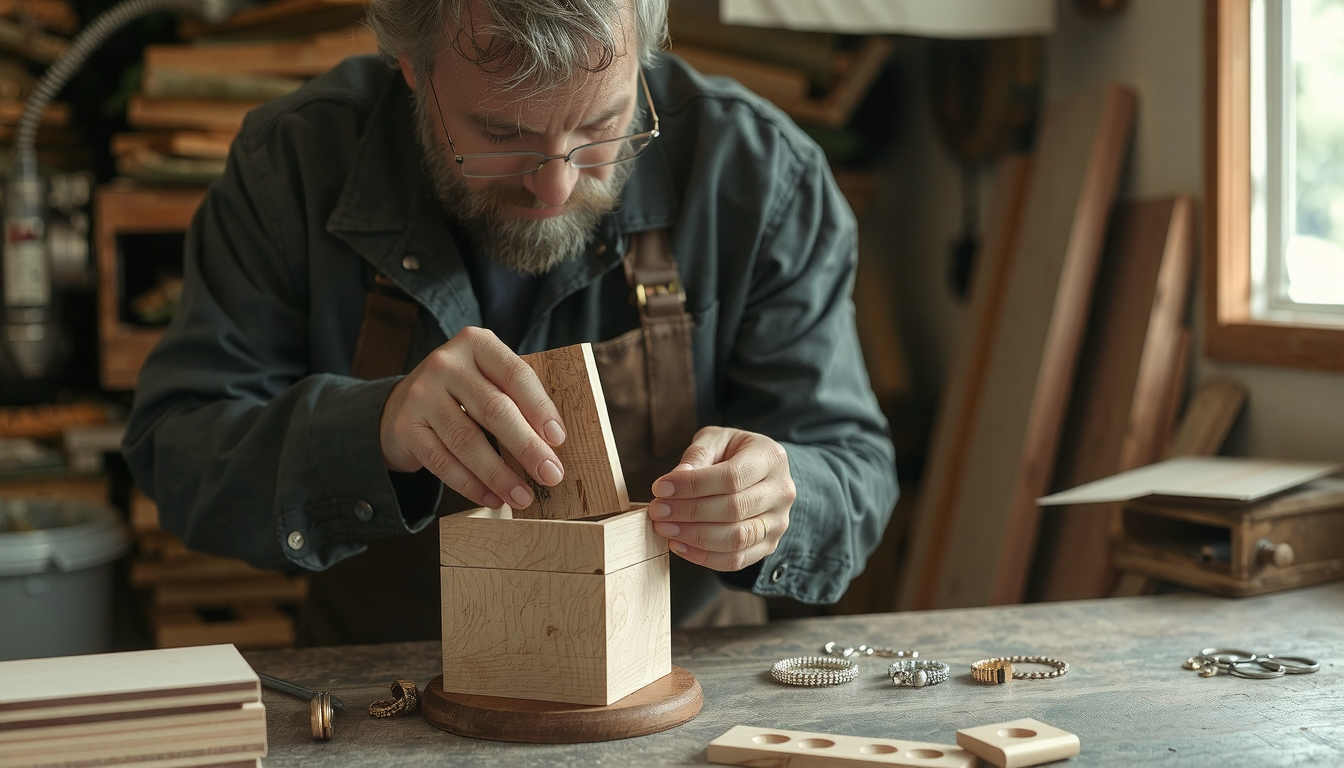 A box that is lined with felt or velvet will look more luxurious and will also protect delicate items. The trick for obtaining clean and professional lining is to not glue fabric directly.
Our go-to method creates removable inserts. The first thing you need to do is to cut thin cardstock to fit the bottom and the four inside walls of your box. After that, cut your fabric slightly larger than each cardstock piece.
Tightly wrap the fabric around each cardstock piece and tape it securely on the back. You will have neatly wrapped panels. You can press-fit them inside the box or use a small amount of glue; this will ensure that the seams are sharp and there is no sticky glue showing through.
Adding Custom Touches
Personalization is what makes handmade projects special. You could use wood burning (pyrography) to etch a letter or design on the top lid. Alternatively, make a tiny handle from contrasting wood or add some simple chip carving for texture.
Need More Inspiration?
Once you have learned how to make a small jewelry box out of wood, you may want to explore more advanced designs. If you are a person who is looking for an original design for your next project or who is looking for a professionally crafted gift, exploring specialized styles can be a great aid. Simply by browsing through a dedicated jewelry box supplier, you will get a long list of classic or modern designs as well as ideas on combinations of wood and functionality that you may consider when making your own creations.
Frequently Asked Questions (FAQ)
These are some of the common FAQs that you may encounter while learning how to make a small wooden jewelry box.
What is the best wood for a beginner to work with?
Our top recommendation for beginner users is Poplar or Pine. Poplar is a hardwood that’s relatively soft, affordable, and easy to work with. It also works great for painting. Pine is an affordable softwood that is very easy to cut but prone to dents.
How do I repair tiny holes formed in the joints?
For very small gaps, you can create filler by mixing fine sawdust from your project with a little bit of wood glue. Put the paste into the gap, leave it to dry, and then sand it smooth. This way, you can ensure that the filler is the exact color of your wood.
What are the most suitable hinges for a small jewelry box?
The most common and simplest hinges to use are small decorative butt hinges. If you want a more exclusive aesthetic, small box hinges or quadrant hinges are good options, but they may need more precise installation. Usually, this involves making a shallow recess, known as a mortise, to fit it in.
Is it possible to make a jewelry box without a table saw?
Yes, you can! Although a table saw is more efficient and precise, it is still possible to create a really nice box just with the use of a quality handsaw (like a Japanese pull saw or a miter box saw) and proper measurements. Remember, patience and a steady hand are the keys.
What is the most durable, non-toxic finish?
A great choice is pure Tung oil or a hardwax-oil finish (such as Rubio Monocoat or Osmo Polyx-Oil). These finishes soak into the wood, are long-lasting, simple to repair, and are generally food-safe/non-toxic when fully cured. Hence, they are perfectly safe for personal items like a jewelry box.