The process of creating a beautiful object with your own hands has a special charm. A handmade wooden jewelry box is not just a functional storage box. It can be a personal gift or a family heirloom. Here is the step-by-step procedure of creating a small jewelry box using wood.
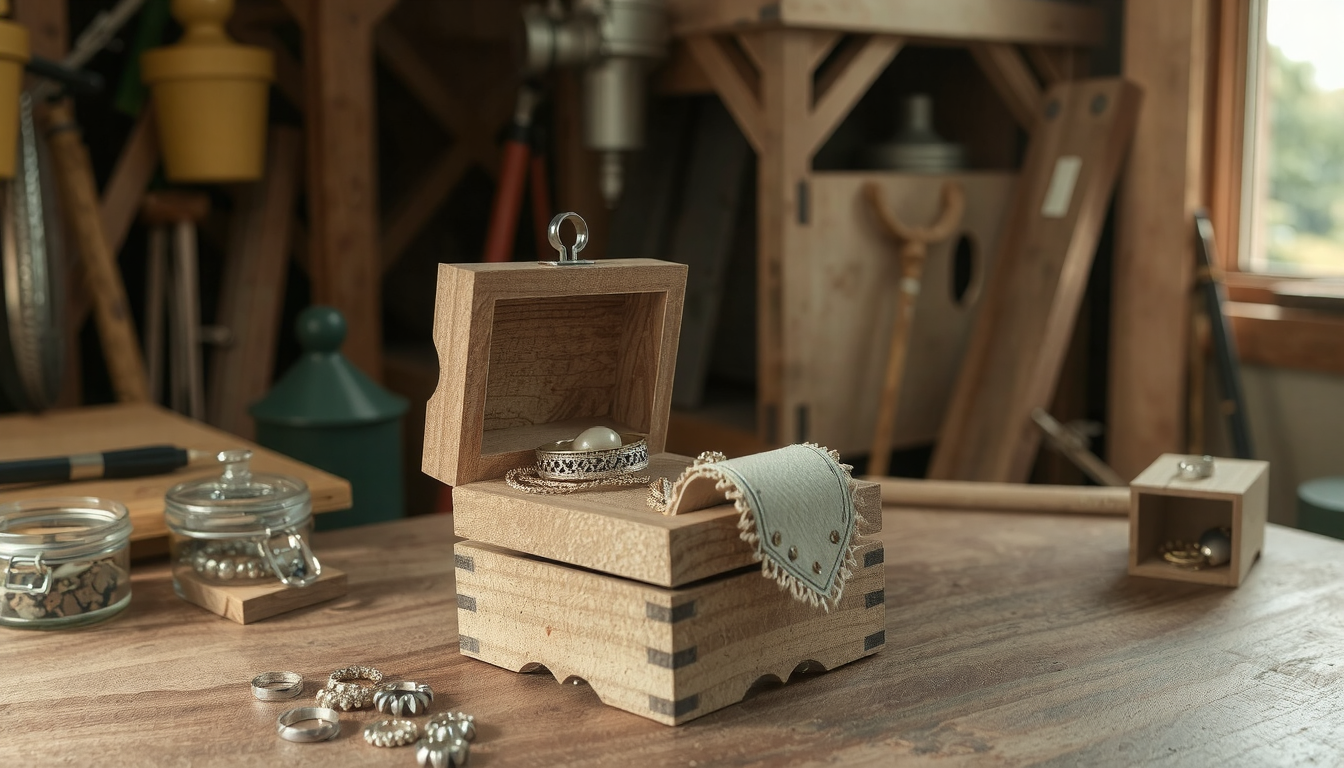
This article has everything necessary to make it happen. First, we look at the tools and the materials required. Then, we will guide you through each and every step to make a simple box. Additional tips on how to make your box better will also be provided. This project is perfect for novice woodworkers.
Getting Started: Acquiring Your Tools and Materials
A good plan is the secret of success in woodworking. By obtaining your tools and materials beforehand, you can reduce the level of disruption in your project. Frustration is thus avoided, and your results are improved. Use this checklist to help you get ready for your initial cut.
Necessary Tools for the Project
You don’t need a huge workshop to get started. Here are the tools that will make building a DIY wooden jewelry box a lot easier.
| Necessary Tools | Optional Tools |
|---|---|
| Table Saw | Miter Saw |
| Measuring Tape | Router with a small bit |
| Wood Glue | Block Plane |
| Clamps (Band or corner) | Random Orbit Sander |
| Sandpaper (various grits) |
Choosing Proper Wood for Your Jewelry Box
The type of wood you select has a lot to do with how your box will look, feel, and how much you will pay for it. Some kinds of wood are also more beginner-friendly than others. Here is a simple chart to help you decide.
| Wood Type | Ease of Working | Cost | Appearance & Grain |
|---|---|---|---|
| Pine | Easy | Low | Light color, visible knots, soft. |
| Poplar | Easy | Low | Light cream color, sometimes with green streaks. Fine grain. |
| Oak | Medium | Medium | Strong grain pattern, classic look. Can be heavy. |
| Cherry | Medium | High | Rich reddish-brown color that gets darker with age. Smooth grain. |
| Walnut | Medium | High | Deep, dark brown color. Beautiful and elegant grain. |
Hardware and Finishing Items
These small items are the ones that complete the puzzle.
- Small hinges (butt hinges or small box hinges)
- Wood finish (Danish oil, wipe-on polyurethane, or wax)
- Lining material (felt or velvet)
- Safety gear (safety goggles and a dust mask are essential)
7 Steps to Create Your Jewelry Box
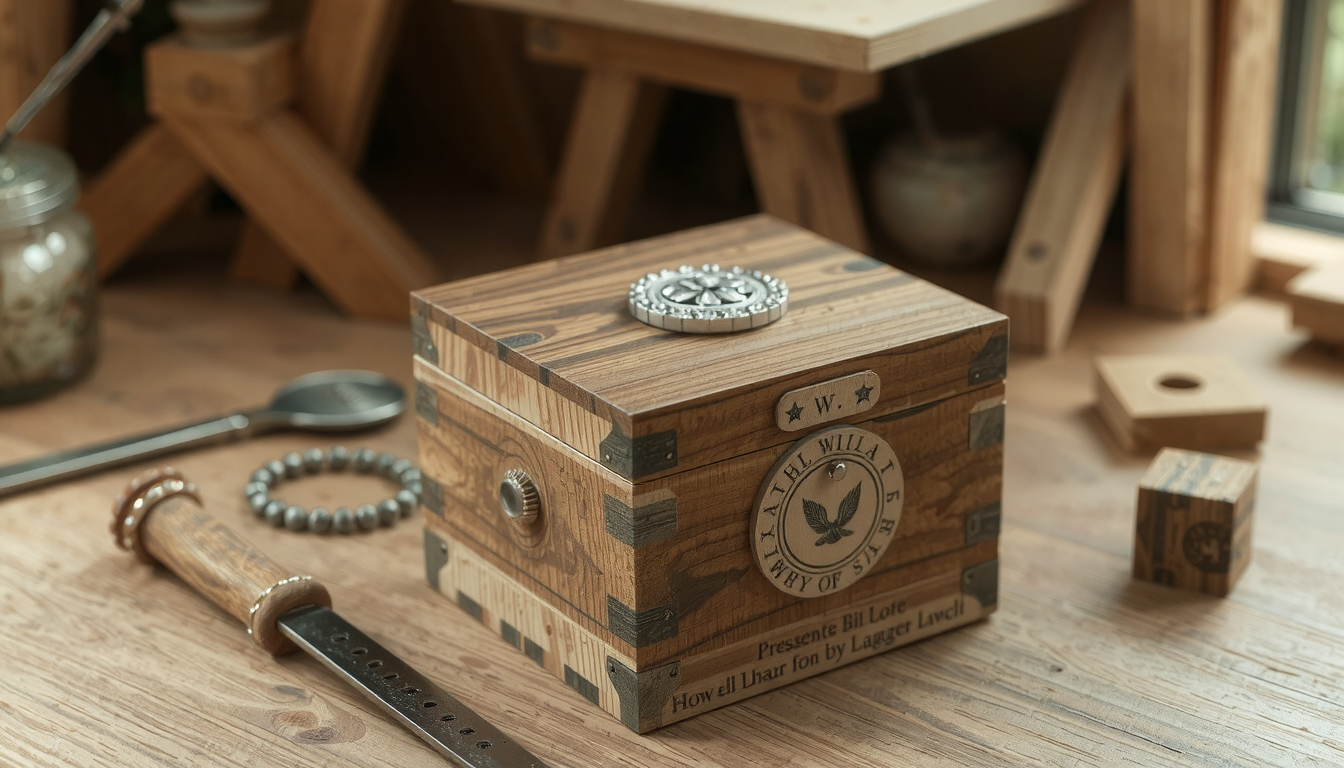
Now comes the actual making of your wooden jewelry box. This section guides you through building one step at a time. Follow the steps closely to achieve the desired outcome.
Step 1: Design and Plan Your Cuts
A straightforward plan can beautify the time and materials used. Let’s design a product for this project that is a box that measures 8 inches long, 5 inches wide, and 3 inches tall. You can use wood with a thickness of approximately 1/2 inch.
For an even more stylish finish, you can plan for continuous grain. This means using a single long board for all four sides. After you’ve cut the pieces, retain their order since they will match the wood grain around the corners. The trick of matching the grain around the corners is a very cheap way of making a simple box look very fancy.
Step 2: Mill and Cut the Box Sides
Precision is your best ally on this one. Adjust your table saw blade to exactly 45 degrees. Use these angled ends to cut your four side pieces to their finished lengths. Your final output will consist of two long sides and two short ones. Just be careful that the sides getting matched are the exact same length.
Step 3: Cut the Upper and Lower Groove Slots
Next, we will be routing shallow grooves inside the side pieces. These grooves will hold the upper and lower panels. Set your table saw blade at a lower height, such as about 1/4 inches. Adjust the groove to be on the inside face of all four side pieces, and place it near the top and bottom edge.
Step 4: Assembling and Gluing the Box
Before applying any glue, make sure to do a “dry fit.” This means you assemble the box without glue to check that all joints fit tightly. When everything looks good, you can go to the gluing process.
Apply a thin layer of wood glue to each angled end. Get the corners together, and, with the band clamp, apply the necessary pressure to all the corners simultaneously. The band clamp works marvelously because it pulls all four corners at once. Before it dries, check that your box is perfectly square by using a small square.
Step 5: Cutting and Fitting the Top and Bottom Panels
Measurement is the first step. Measure the opening made by the gouge you cut before. Cut two thin panels of wood or plywood to the dimensions of these openings. The panels should slide into the grooves snugly. One will be for the top and the other one for the bottom. Adhere them. Your project now looks like a box made entirely of wood with no visible openings.
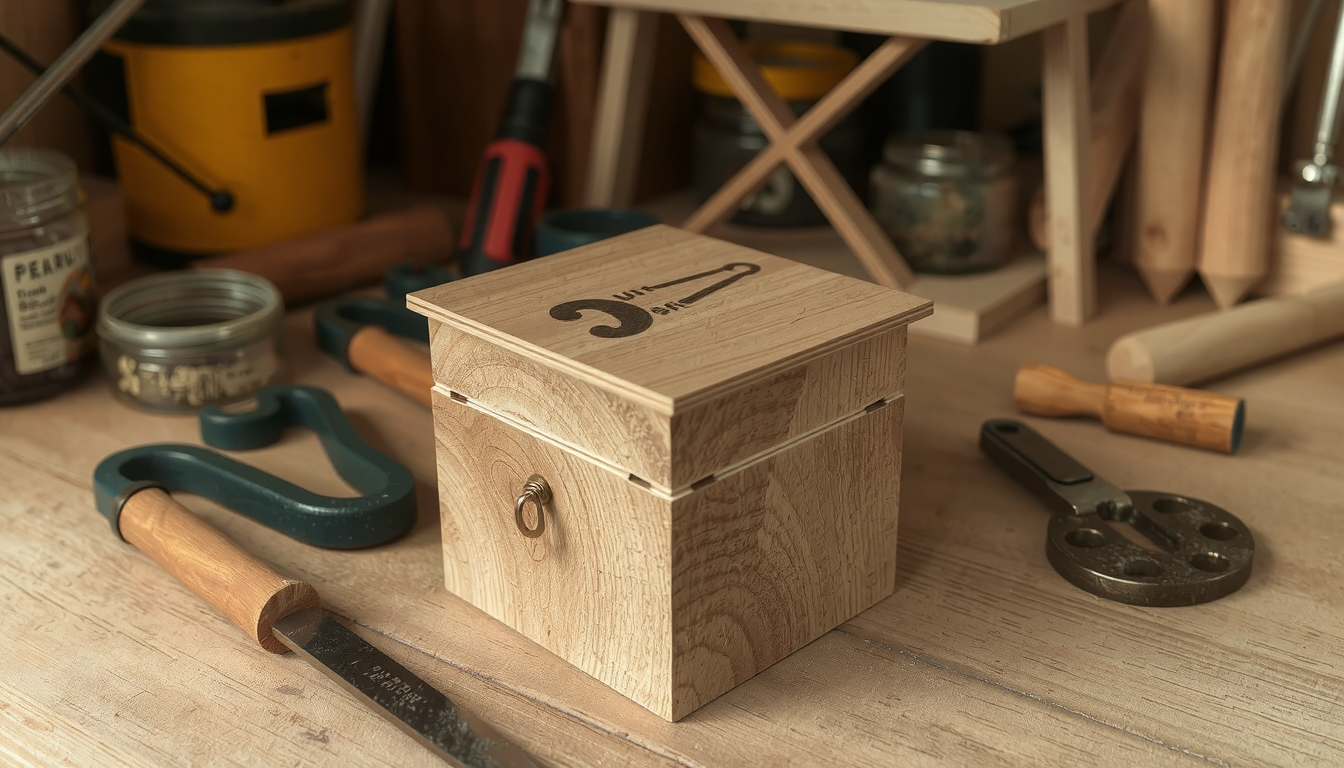
Step 6: Separating the Lid from the Base
This is another important step in learning how to make a small wooden jewelry box. Set the fence on your table saw to about 1 inch. This will be the height of your lid. Lift the blade just enough to penetrate the box wall.
This is a big moment for your box. Take a deep breath. Hold your workpiece firmly against the fence. Move the box through with a smooth motion on all four sides. This cut separates the lid from the base. This step is a real manifestation of how a simple DIY wooden jewelry box build is brought to life.
Step 7: Sand Everything Smooth
After separating the lid, you may have some edges left rough. Lightly sand the cut edges of the lid and box base. This initial sanding prepares the box for the final finish.
Besides the Basics: Making Your Jewelry Box Design More Attractive
After you have got a grip on the basic box design, you can add some particulars to your next project, improving it even further. These are the upgrades that will serve both beauty and functionality.
Adding Strength and Style with Splines
Splines are wooden pieces placed in cuts that run through the corner joints. They make the corners stronger. If you do the splines in a different wood than the base, e.g. using maple splines on a walnut box, it also becomes a beautiful design feature.
Making a Lift-Out Tray for Better Organization
A small, custom-fit tray that fits precisely inside the box is a wonderful addition. It becomes an extra layer of storage for smaller items such as rings or earrings. You can create a simple tray using very thin wood and only a few box joints.
Considering More Advanced Designs
After your first box is completed, perhaps you want to try new things. There are many drafts for intricate projects. Studying skilled woodworkers’ designs is a good way to get ideas and detailed plans. For those who are looking for sophisticated designs, checking the work of a jewelry box manufacturer can be very beneficial.
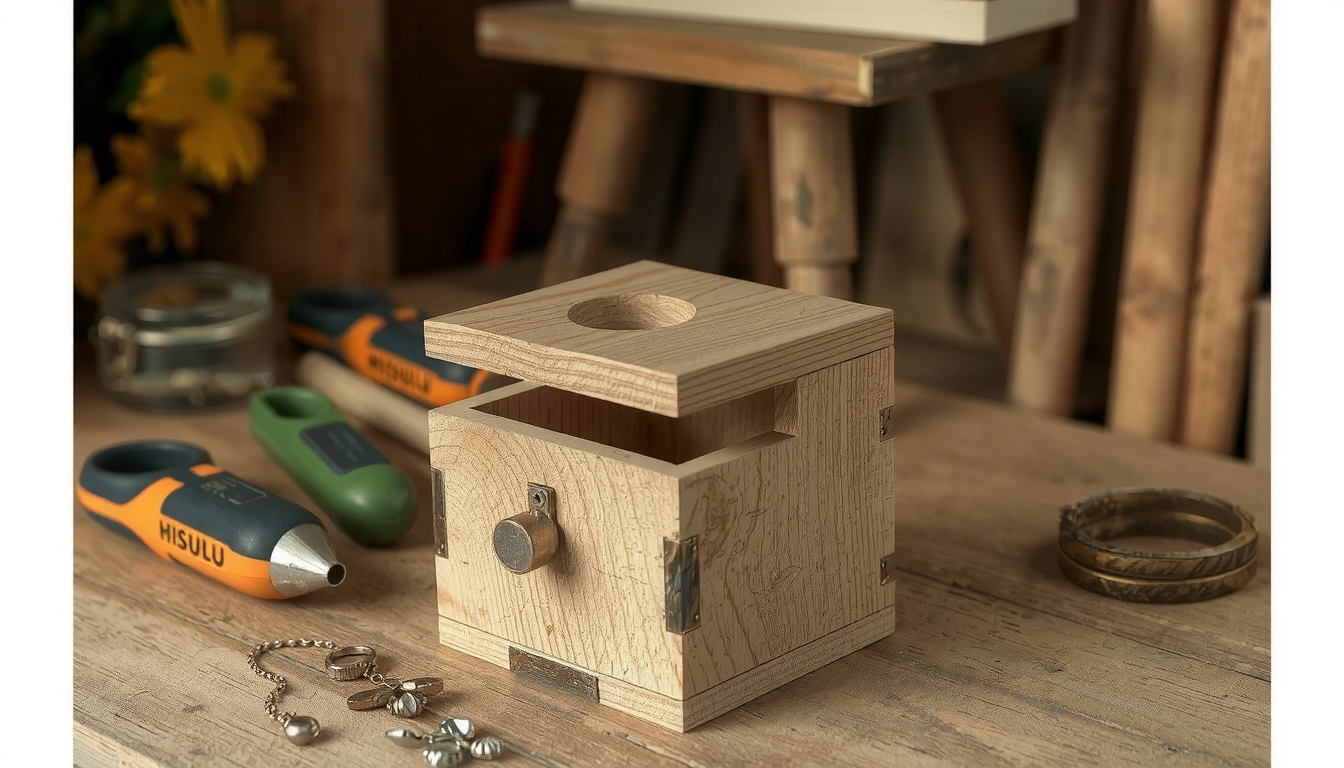
Final Touches: Lining to the Inside and Sanding
The last touches turn a normal wooden box into a piece of decorative art. Do not hurry through this step. A wonderful finish and soft lining bring the box to life.
Sanding the Right Way to Get a Perfect Surface
Sanding is a meticulously planned operation. Do not omit sandpaper grits. Start from 120-grit to clear the machine marks or small scratches. Afterward, move to 180-grit and finish with 220-grit. Test the surface after each stage. You want a surface to feel as smooth as silk.
Choosing and Using the Right Finish
The finish protects the wood and brings out its natural beauty. A beginner-friendly option is a wipe-on oil finish, as it is forgiving and provides a warm, natural feeling to the wood.
To apply it, use a clean rag to wipe on a thin coat. Allow it to soak for a few minutes, then wipe off any excess. Let it dry completely, then lightly sand with very fine sandpaper (320-grit) and apply another coat. Usually, two or three coats are enough.
How to Lining Your Box with Felt or Velvet
The lining of your jewelry box not only adds luxury but also prevents scratches to the jewelry. This method is simple and gives a clean result.
- Cut a piece of thin cardboard to fit perfectly in the bottom of the box.
- Use a spray adhesive to lightly coat one side of the cardboard.
- Carefully lay your fabric (felt or velvet) onto the sticky cardboard and smooth it out.
- Trim the extra fabric from the edges with a sharp craft knife.
- Simply drop the finished insert into the bottom of the box. No glue is needed.
This will add luxury. For high-end projects, materials like those found in premium velvet jewelry boxes wholesale can make a big difference.
Conclusion: Your Handcrafted Treasure
Great work! You have learned how to create a small wooden jewelry box from the first cut to the last polish. This project gives you a basic woodworking experience you can carry with you for years to come.
A handmade box is a one-of-a-kind, personal treasure. As you continue your exploration in the world of woodworking, visiting the various designs offered by a global jewelry box supplier can be the source of endless ideas for your upcoming creations.
Frequently Asked Questions (FAQ)
Q1: What is the best wood for a beginner to use for a jewelry box?
A: The best option for your first project is wood that is both cheap and easy to work with like Poplar or Pine. Poplar is excellent because it has a fine, even grain that takes paint very well. If you want a colored finish, it is the best option.
Q2: Is it possible to make a wooden jewelry box without a table saw?
A: Absolutely, you can. A table saw is a tool that makes the process of cutting accurate angles relatively easy, but you can get excellent results with a quality miter box and sharp handsaw. Although it will take a bit longer and require careful marking, it is very much achievable.
Q3: What are the tricks to get clean, tight corner joints?
A: Precision is the key here. First, make sure your saw blade is set to 45 degrees exact. Second, ensure that all four side pieces are cut to the exact same lengths. A band clamp is very useful in applying even pressure to all four corners at the same time during glue-up.
Q4: What is the best way to finish a jewelry box?
A: The best is a simple and clean, hard-to-mess-up finish like wiping on oil such as Danish oil. It soaks in the wood, reveals the natural grain, and provides good protection. Just apply a few thin coats, wiping off the excess after each one.
Q5: What is the recommended wood thickness for a small jewelry box?
A: A small to medium jewelry box made of wood from 1/2-inch to 3/4-inch thickness is a good option. This is the thickness that can give carry enough strength for a good joint while the wall is durable without compromising the box’s appearance.