
More Than a Box: The Eternal Charm of Chinese Lacquerware
A Chinese lacquer jewelry box represents much more than storage. It is a functional art piece. It is a historical relic. It proves that centuries of painstaking craftsmanship exist.
These stunning items are the perfect fusion of practicality and beauty. They provide security to your valuables while being treasures themselves.
So, what are their unique features? Look for these signature features: an opulent, eye-catching lacquer finish, firm wood that often carries an aromatic scent, and ornate decorations. You could spot anything from detailed paintings to delicate inlays.
This manual will traverse the extensive timeline of this craftsmanship style. We will disclose creation secrets, help you discern quality artifacts, and teach maintenance tricks. Consider this your all-in-one source of information regarding the Chinese lacquer jewelry box.
Travel Back in Time: The Story of the Chinese Jewelry Box
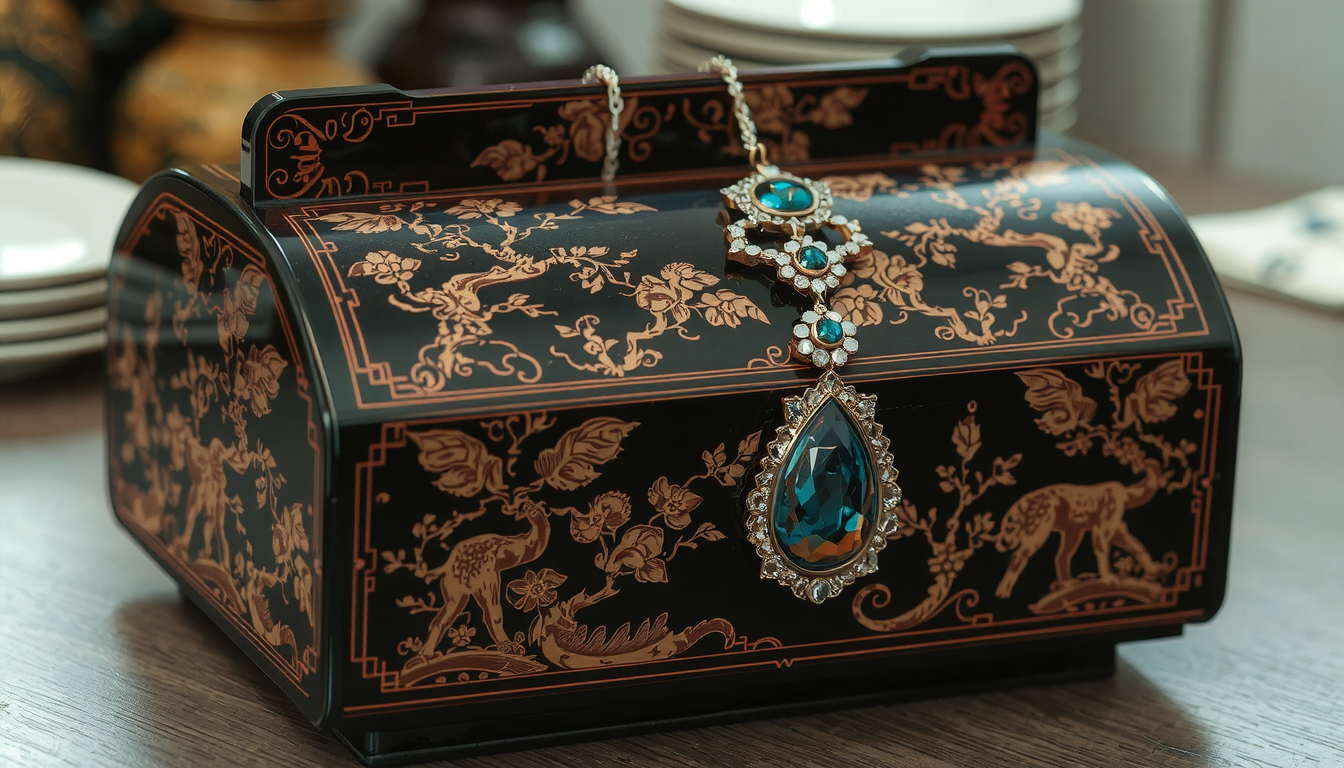 Understanding a Chinese lacquer jewelry box means knowing its deep roots. This art form is one of the longest continuous artistic practices in the world. The tale retraces the evolution from simple utility to imperial splendor.
From the Antiquity to the Mings of Gold
Lacquerware has existed in Chinese culture for thousands of years. Yet, the art form peaked during two dynasties: the Ming (1368-1644) and Qing (1644-1912). Imperial workshops during this period produced items of such incredible complexity and beauty that the court became their primary patrons.
Ming Dynasty boxes became increasingly elaborate, featuring intricate paintings and even secret compartments for valuables. As The History of Chinese Jewelry Box explains, these items transformed from simple containers into elaborate works of art. They reflected their owners’ status and wealth.
The Chinese Lacquer Jewelry Box in the Contemporary Era
Even though the dynasties fell, the craft did not perish. Today’s artisans continue the tradition, remaining faithful to ancient techniques.
Modern or vintage Chinese lacquer jewelry boxes remain highly sought after. Collectors prize them. People give them as meaningful cultural gifts. Interior designers use them as sophisticated elements. They bridge ancient artistry with contemporary appreciation.
What Makes a Masterpiece: The Techniques Behind the Craft
Creating a genuine Chinese lacquer jewelry box requires immense skill and patience. Every component matters. From the hidden core to the glossy surface, each element serves a purpose.
The Foundation: The Wood Core
Construction begins with a precisely made wooden box. Wood selection is of utmost importance. It must provide stability and longevity while withstanding lacquering stresses without warping.
Common wood choices include pine for stability, camphor for its aromatic and pest-repellent qualities, and rosewood for high-end pieces. Joinery often uses no nails, relying on traditional techniques to ensure a seamless foundation.
The Heart of the Box: Lacquering It
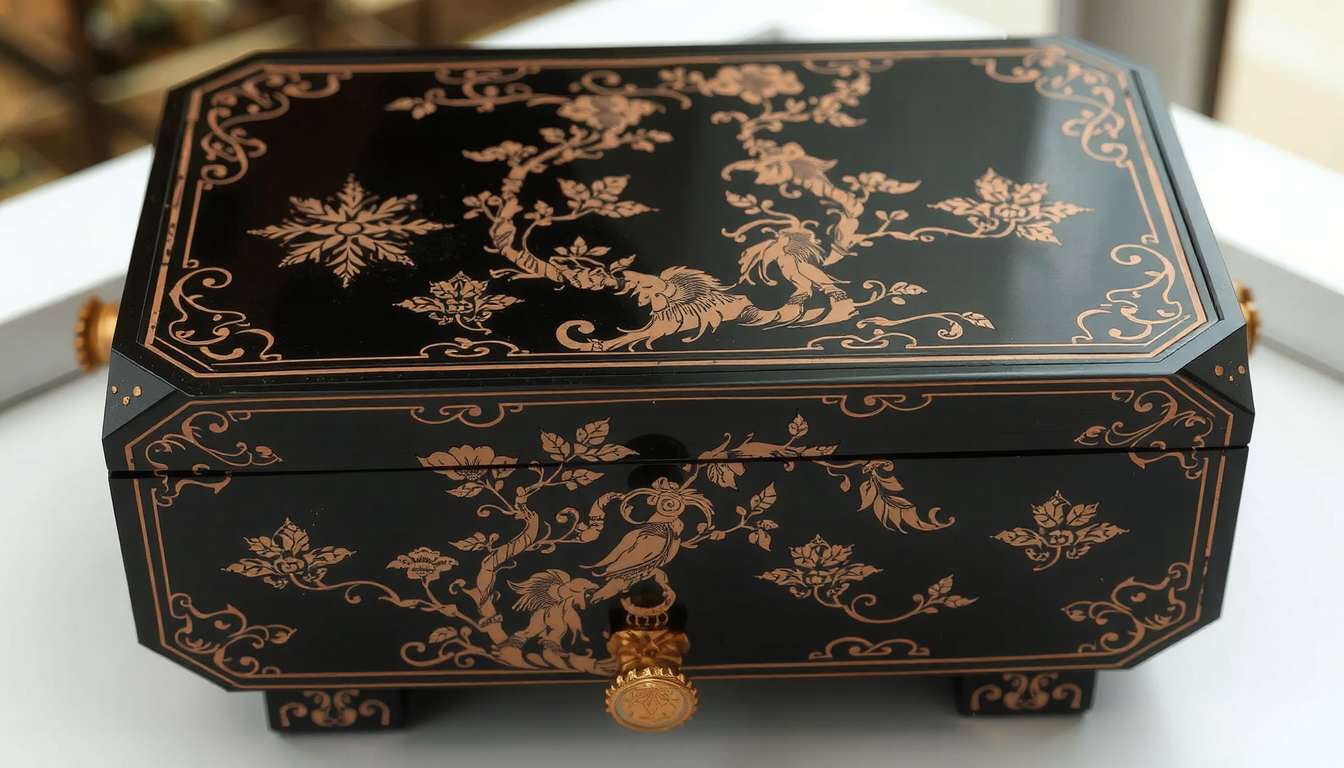
True lacquer isn’t synthetic paint. It’s refined sap from the lacquer tree (Toxicodendron vernicifluum). This natural polymer creates an incredibly durable, waterproof, and beautiful finish. The process is painstaking and can take months to complete.
- Step 1: Preparation: The raw wood box gets sealed with lacquer mixed with clay or powdered bone. This fills the grain, creating a perfectly smooth canvas.
- Step 2: Layering: Dozens of gossamer-thin lacquer layers are applied with fine brushes, sometimes over a hundred layers. Each application is separate and deliberate.
- Step 3: Curing: After each layer, the box goes into a warm, humid cabinet. This controlled environment allows the lacquer to properly cure through polymerization.
- Step 4: Polishing: Once cured, each layer gets meticulously wet-polished by hand. Fine abrasives like powdered charcoal or pumice stone make it perfectly smooth for the next application.
- Step 5: Final Polish: The final layer receives polishing with the finest abrasives. Sometimes even the palm of the hand is used to achieve the characteristic deep, liquid-like gloss.
The Emphasis on Decoration: Inlays and Paintings
The final stage is decoration. Here, the artist brings the surface to life, transforming a lacquered box into a unique piece of art.
Common techniques include intricate hand-painting of symbolic scenes and carving through colored lacquer layers. This style is known as tixi or, in its red form, cinnabar. Inlay work involves carefully cutting and placing pieces of mother-of-pearl, colored soapstone, jade, and sometimes bone or ivory substitutes in vintage pieces. This creates a rich, textured mosaic against the dark lacquer.
The Language of Art: The Symbolism Aboard the Jewelry Box
Motifs on a Chinese lacquer jewelry box are not merely decoration. They’re a rich visual language steeped in folklore, philosophy, and well-wishes. Understanding these symbols transforms the box from a beautiful object into a story.
Each image carries a specific meaning, often intended to bestow blessings upon the owner.
| Symbol | Meaning & Significance | Commonly Seen On… |
|---|---|---|
| Dragon & Phoenix | The Emperor and Empress; the ultimate symbol of marital bliss, power, and good fortune. | Wedding gifts or high-status boxes. |
| Peony Flower | The “King of Flowers”; represents wealth, prosperity, high social status, and feminine beauty. | Boxes intended for women, gifts for success. |
| Cranes / Pine Trees | Longevity, wisdom, and enduring youth. The crane is a celestial messenger believed to live for a thousand years. | Gifts for parents, elders, or to wish someone a long life. |
| Butterflies | A pair of butterflies symbolizes young love, freedom, beauty, and a long life. | Boxes with romantic themes, often for a younger woman. |
| “Shou” (壽) Character | The stylized calligraphic symbol for longevity. | Found on a wide variety of boxes as a general blessing. |
| Landscape Scenes | Depicting mountains, rivers, and scholars in nature; reflects a longing for a harmonious life, peace, and Daoist ideals. | Larger chests, scholar’s boxes, or pieces for contemplation. |
Learning to read this art creates a deeper connection with the piece. You appreciate not just the artist’s skill but the cultural values embedded in their work. A Chinese lacquer box doesn’t just hold treasures; it speaks of them.
A Buyer’s Guide: Making the Right Choice on a Chinese Lacquer Jewelry Box
Choosing the right Chinese lacquer jewelry box requires a discerning eye, whether you’re a seasoned collector or a first-time buyer. The choice between antique and modern pieces depends on personal preference and purpose.
Antique & Vintage vs. Modern: Which is Right for You?
Antique and vintage boxes offer historical allure, possessing a unique patina and character that only time creates. When examining older pieces, look for authentic wear, period-appropriate hardware, and genuine materials. For example, this vintage Chinese lacquer and inlay box shows features to seek, like beveled mirrors and specific signs of age. Downsides can include fragility, higher cost, and the need for careful preservation.
Modern boxes provide pristine condition and greater durability for daily use. They’re also more widely available. When assessing new pieces, focus on the quality of the finish and the precision of the artistry. A well-made modern box honors traditional methods while offering flawless presentation.
Factors to Consider for Quality
When examining a piece, perform these tactile and visual checks:
- Feel the Surface: Run your hand over the lacquer. A high-quality finish feels incredibly smooth, cool, and deep. It shouldn’t feel thin, sticky, or like plastic.
- Check the Inlay: Inlay material edges like mother-of-pearl should be flush with the lacquer surface. Raised edges or glue-filled gaps indicate lesser craftsmanship.
- Inspect the Joints & Hardware: Examine the corners and construction. Joints should be tight and seamless. Brass or metal hardware should be well-fitted, functional, and have good weight.
- Examine the Interior: Quality boxes are finished carefully inside and out. The interiors should be cleanly lacquered (often in auspicious red or classic black) or lined with fine silk or velvet, with no loose threads or glue marks.
Where to Search for Your Treasure
For antique and vintage items, explore local antique shops and reputable online marketplaces like 1stDibs or Chairish. Auction houses are another option. You can see various styles on sites like Asian Jewelry Boxes – Oriental Furnishings.
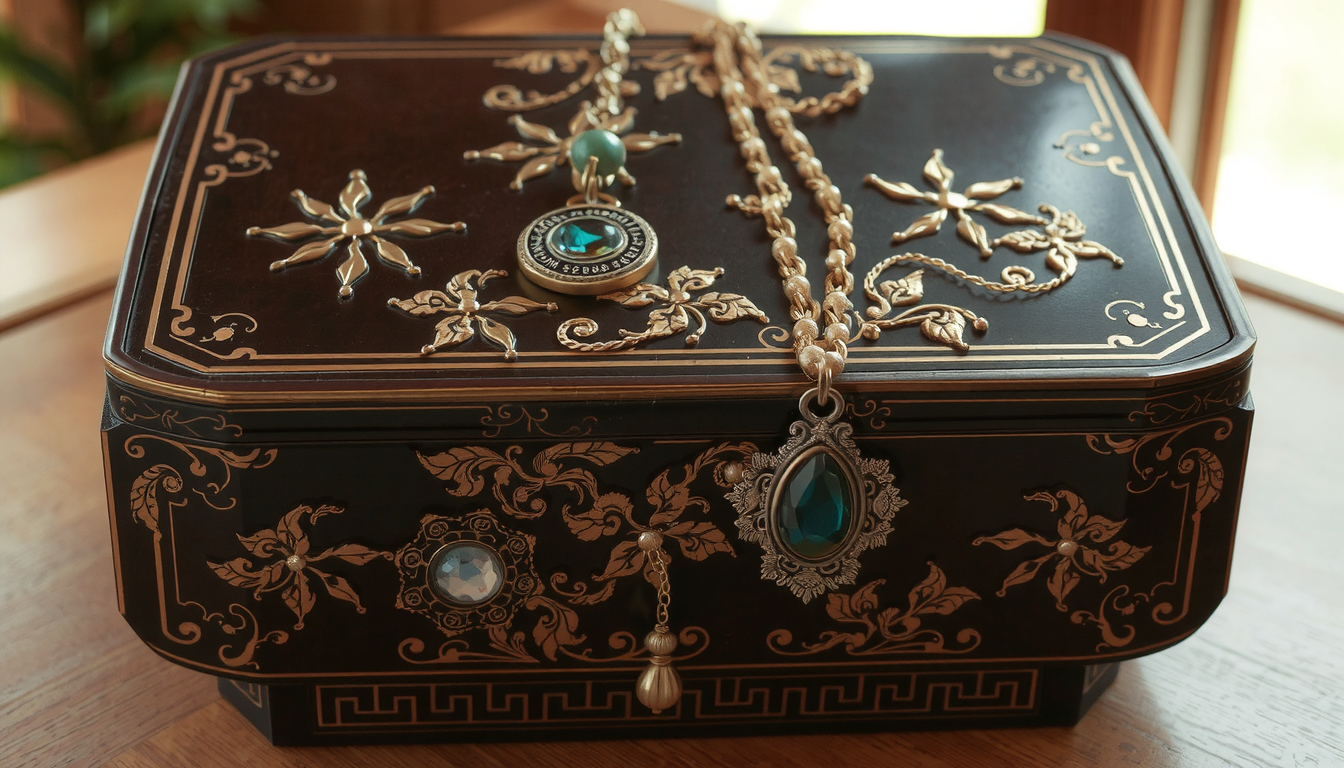
For high-quality modern or custom pieces, specialist suppliers like Jewelry Box Supplier Ltd offer contemporary options. They honor traditional aesthetics, ensuring you receive new pieces built with an appreciation for this ancient art form.
Preserving Beauty: How to Care for Your Lacquer Jewelry Box
A lacquer jewelry box is durable, but its fine finish can be damaged by improper handling and environmental factors. Following simple rules protects your investment and preserves its beauty for decades.
The Do’s
- Dust gently: Use only a very soft, dry cloth. Microfiber, silk, or chamois cloth is ideal. Never use paper towels or rough rags that could leave micro-scratches.
- Control the environment: Keep the box in stable conditions. Position it away from direct sunlight, which fades colors, and heat sources like radiators, which cause wood shrinkage and lacquer cracking.
- Handle with care: Always lift from the base, not by the lid or delicate hardware.
The Don’ts
- Never use chemical cleaners: Avoid all commercial furniture polishes, solvents, waxes, or abrasive cleaners. These chemicals can react with the natural lacquer and permanently cloud or damage the finish.
- Don’t expose to moisture: While lacquer is water-resistant, never use a wet cloth for cleaning. Blot spills immediately with a soft, dry cloth.
- Don’t place sharp objects on the surface: The finish, while hard, can scratch. Avoid placing keys, metal jewelry, or other abrasive items directly on the lid.
A Treasure that is Timeless for Your Treasures
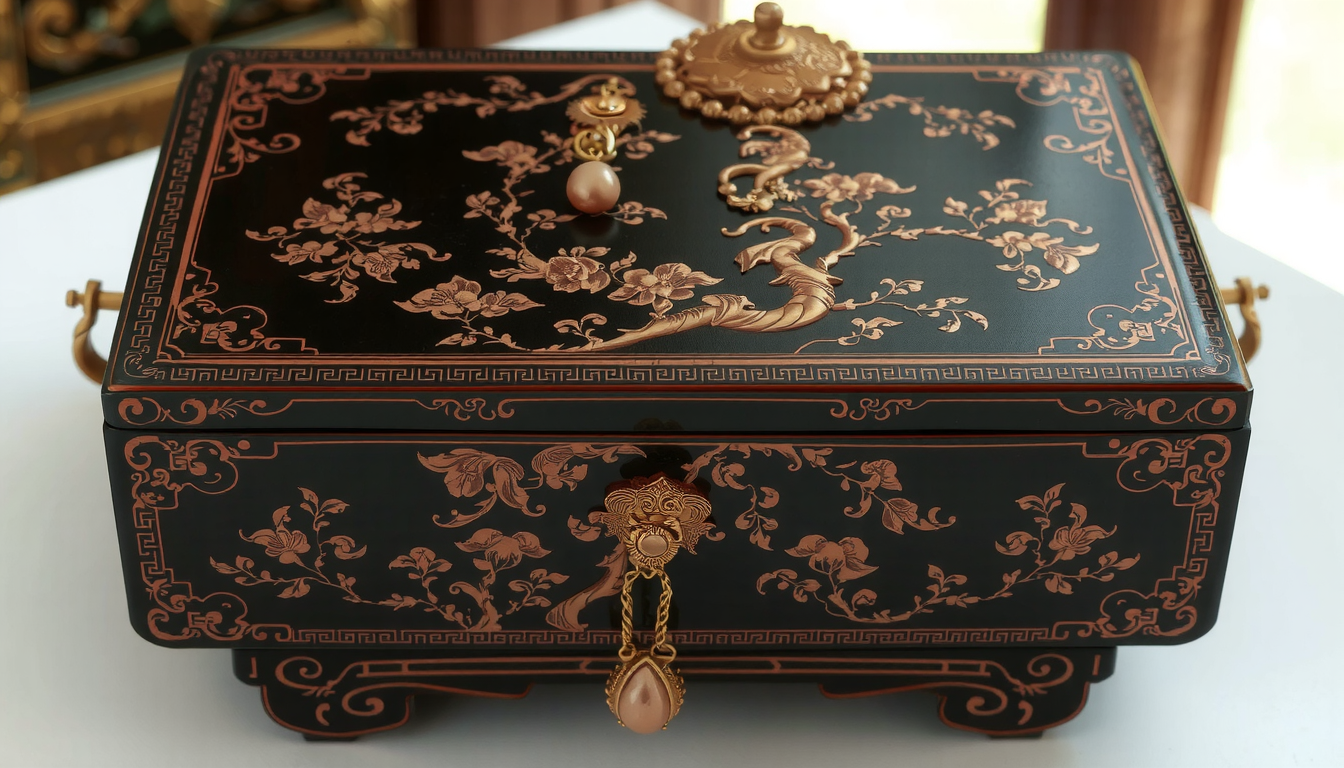 A Chinese lacquer jewelry box balances profound history with practical function. It echoes imperial courts. It showcases artistic dedication. It gracefully guards your most cherished possessions.
By choosing, understanding, and caring for one, you become a custodian of this legacy. You hold a piece that can be passed down as a future heirloom.
Commonly Asked Questions (FAQ)
What is the difference between Chinese and Japanese lacquerware?
Both traditions are highly renowned but have distinct styles. Chinese lacquer often features bold, deep carvings (like cinnabar) and complex inlay scenes with symbolic motifs like dragons and phoenixes, focusing on narrative. Japanese lacquer (urushi) is celebrated for its maki-e technique (sprinkling gold or silver powder onto wet lacquer) and tends toward more refined, minimalist, nature-inspired designs.
Are antique Chinese lacquer jewelry boxes a wise investment?
Indeed, they can be. An antique piece’s value depends on its age, condition, quality of craftsmanship, materials used, and provenance. Well-preserved boxes from desirable periods, such as the 18th or 19th century, are highly sought after by collectors and can appreciate in value over time.
How do I identify real mother-of-pearl inlay?
Real mother-of-pearl has a natural, iridescent shimmer known as “orient.” The colors and luster will shift and change as you move the box in the light. Plastic or synthetic imitations have flat, uniform patterns or simple, glittery appearances that don’t change with the viewing angle.
What does the red interior of many boxes signify?
Red is the most auspicious color in Chinese culture, symbolizing happiness, prosperity, good fortune, and success. Using red lacquer for a jewelry box interior is a traditional practice intended to bestow these blessings upon the owner and the precious items stored within.
Can a damaged Chinese lacquer jewelry box be repaired?
Yes, but it is highly specialized work that requires a professional conservator. Lacquer restoration is a meticulous craft, very different from standard furniture repair. Attempting to fix valuable antiques with modern varnishes or glues can permanently damage the piece and severely diminish its value.