Making something with your own hands is a feeling that is hard to describe. This is even more so when the item you made is both attractive and useful. The mastery of making a box out of wood (a jewelry box) is really a step that could help any person regardless of their skill level.
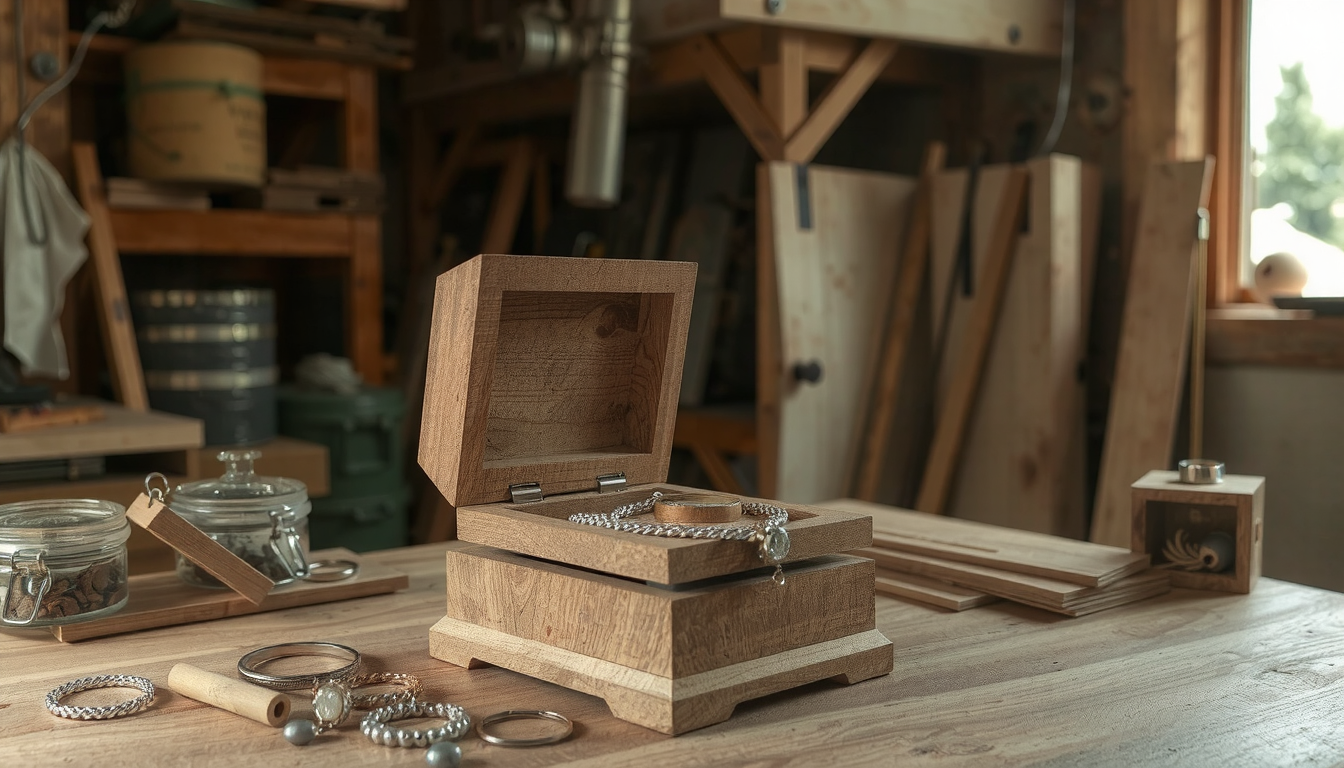
The process may be very enjoyable and it will also be nice to see your work. We will guide you through every step of the way. We will explain the steps of planning your design. We will make a box together by observing the step-by-step process. We will discuss how you can include personalized details. By the end of this, you will have a thing to show off.
Before You Start: Plan Your Own Perfect Wooden Jewelry Box
Planning is the key to any successful woodwork project, Really is the truth. Making a plan which is so easy to be followed will save you from problems in the future. This step assures you have a clear mind. Then you won’t have the problem of choosing the right material. You will be more than sure that all of your tools are ready.
Step 1: Box Design
Designing a jewelry box starts with; What type of jewelry you want it to hold? Rings, long necklaces, or chunky bracelets? The size of the jewelry will help you decide the size of the box.
Taking a pencil and sheet of paper, draw up a rough idea. You don’t need to be a renaissance artist. A simple line drawing can translate your concept. Consider the type of look you want. Would you choose a simple box with a removable lid? Or a box with hinges? You could even design a tray that rests above the main compartment or add drawers on all sides.
The main aspects to decide are as follows:
- Overall Dimensions: What will be the box measurements? Length, width, and height?
- Lid Type: Magically simple lift-off lid or a hinged one?
- Internal Compartments: Do you plan to have segregated areas for your rings and earrings?
- Design Style: Do you prefer a rustic style, a sleek modern style, or vintage class?
Step 2: Selecting the Right Wood
The choice of wood has great significance to the way your box looks. It also directly impacts how building it will feel. Working with the right type of wood can help a lot for the beginners. Your choice of material is very important when learning how to build a jewelry box from wood.
Below is a simple guide that you can use to refer to some of the most common types of wood:
| Wood Type | Beginner Friendliness | Appearance | Average Cost | Best For… |
|---|---|---|---|---|
| Pine | High | Light color, visible knots | $ | Practicing, rustic look |
| Oak | Medium | Strong grain, classic look | $$ | Durable, traditional boxes |
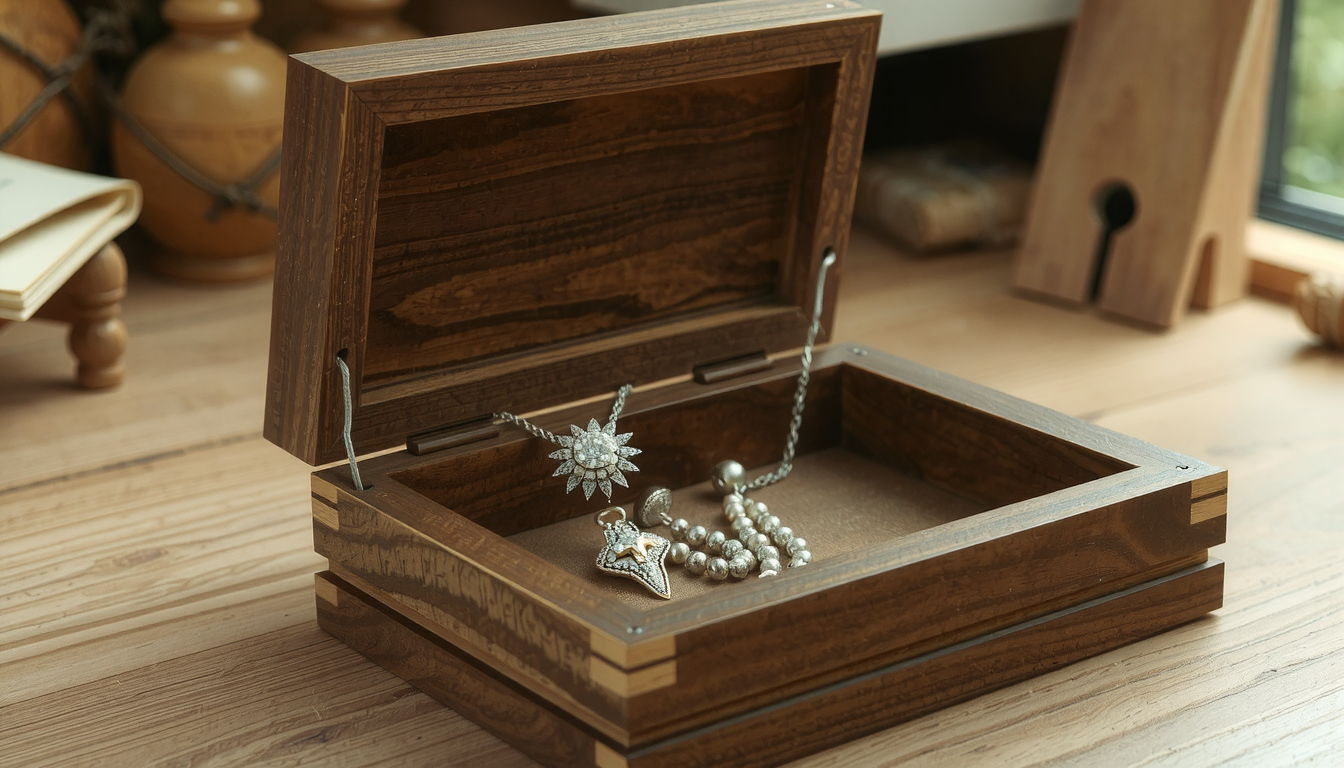
| Walnut | Medium | Rich, dark, elegant | $$$ | High-end, gift-quality boxes |
| Cherry | High | Warm reddish-brown, ages beautifully | $$$ | Elegant, fine-furniture look |
Step 3: Picking and Collecting Tools and Materials
You do not need a big workshop to start working on your wooden jewelry box. Many stunning projects are made with a handful of quality tools. The following is a list of what you will need:
Tools & Materials: Basic Necessities:
- A decent saw (hand saw with a miter box or table saw)
- Tape measure and a pencil
- Wood glue
- Clamps (bar clamps or a web clamp)
- Sandpaper (grits from 120 to 220)
- Safety glasses and a dust mask
- Your chosen wood
Optional but Helpful Tools:
- A power sander (orbital or palm sander)
- A router for adding decorative edges
- A set of chisels for installing hinges
- A drill for pilot holes
For additional tools to make your work easier, you can find a comprehensive list of tools for more advanced projects that you might need as you grow your skills.
How to Build a Simple Jewelry Box Out of Wood: The Basic Structure
Now it is time to proceed to the fun part: box assembly. We are going to demonstrate how to create a simple and beautiful box with mitered corners. These angular joints create an unblemished look for the box; they are not overly difficult to construct.
Step 4: Measuring and Cutting
Here you need to make maximum use of your precision. The age-old proverb says, “Measure twice, cut once,” which is a cliche for a reason! It truly saves wood and frustration.
In the first step, mark the lengths of the four sides on the board. After that set the saw at 45 degrees. It would be good to run a test cut on a scrap wood piece first. Lay the two cut parts parallel to each other to see if they form a perfect 90-degree angle.
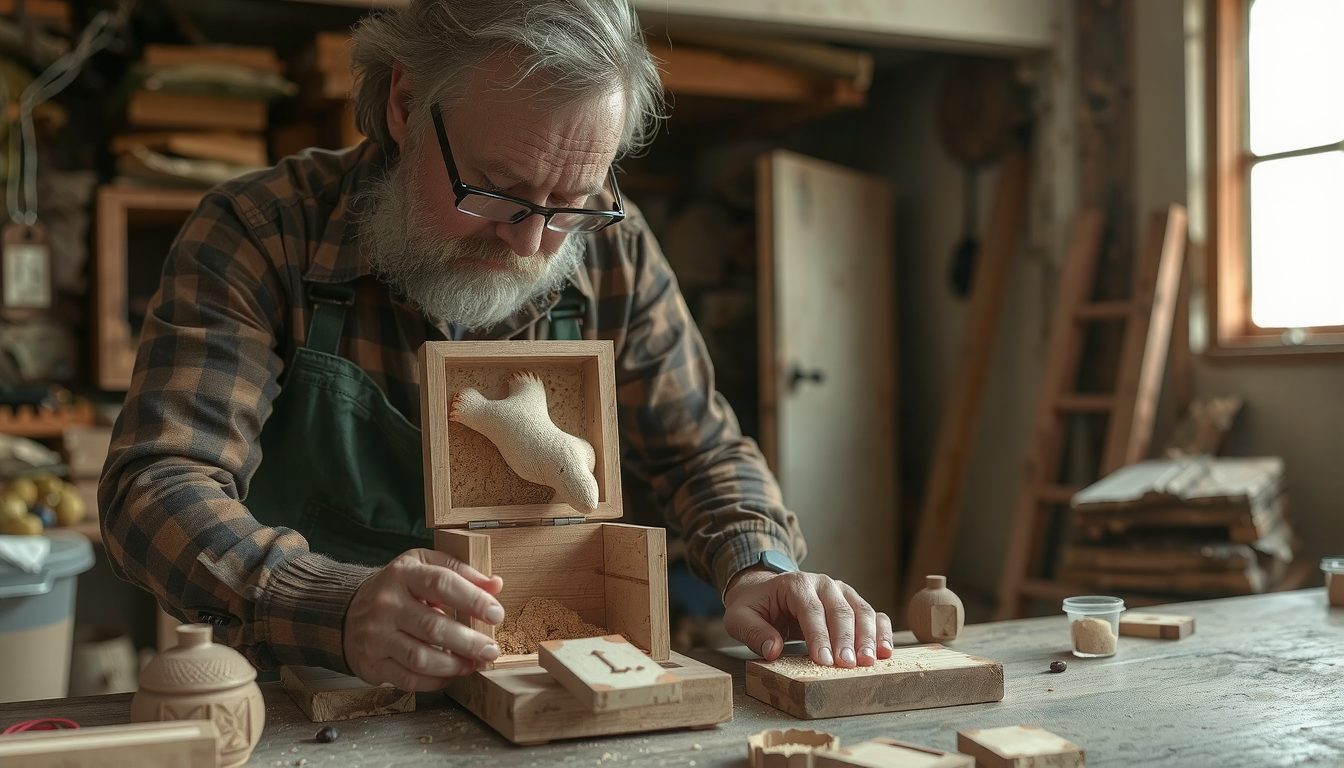
Once your saw is unequivocally turned the right way, cut your four pieces of side wood. Add in a piece of wood to form a top and a bottom. All screws should be for the correct box sizes. The design comes from the fact that the upper and lower parts will fit in between the four walls. All your cuts should be driven by the goal of straightness and cleanliness which will ensure a tight fit.
Step 5: Assembling the Box Body
Before using the glue, do dry fittings, actually. This means that you will first put together the box without any glue. This way, you can see that all the parts fit together just right.
- Arrange the four side pieces on a flat surface. They should be ordered, so the outside faces are down. Use painters’ tape across the joints to hold them together.
- Flip the taped pieces over. Put a thin, even line of wood glue in the joints, along the mitered edges. A small brush can be useful to spread it evenly.
- Place the bottom piece in the right position. Carefully “fold” the sides of wood up around it. The tape on the outside will act like a hinge keeping the corners pulled tight.
- Now, add the top piece. Use a web clamp or bar clamps to secure everything. Wipe off any excess glue that seeps out with a damp cloth. Allow the glue to dry thoroughly, which usually takes several hours or overnight.
Step 6: Forming a Lid
This step can look magical. You will cut your sealed box and make the lid. This method makes sure that the lid and body will match perfectly.
Firstly, decide how high you want the lid to be. A good height is usually around 3/4 inch (or 2 cm) from the top edge. Use a sharp pencil and a ruler. Draw a precise cut line all the way around the box.
Safety First: Should a table saw be used, ensure that your fingers are far from the blade. Use a push stick for safe guiding of the box.
Carefully, cut along the line on all four sides. This technique, which is favored by many woodworkers, serves as the standard to ensure that the lid and base fit perfectly. Once the cut is finished, there will be two pieces – a box base and a lid that fits perfectly on it.
Step 7: Sanding and Finishing
Sanding is what will turn a rough box into a smooth, touchable piece. Start with lower grit sandpaper like 120. It removes any saw marks and levels the joints.
Get to higher grit paper that is like 220. It helps to make the surface super-smooth. Always sand in the direction of the wood grain. This prevents scratches.
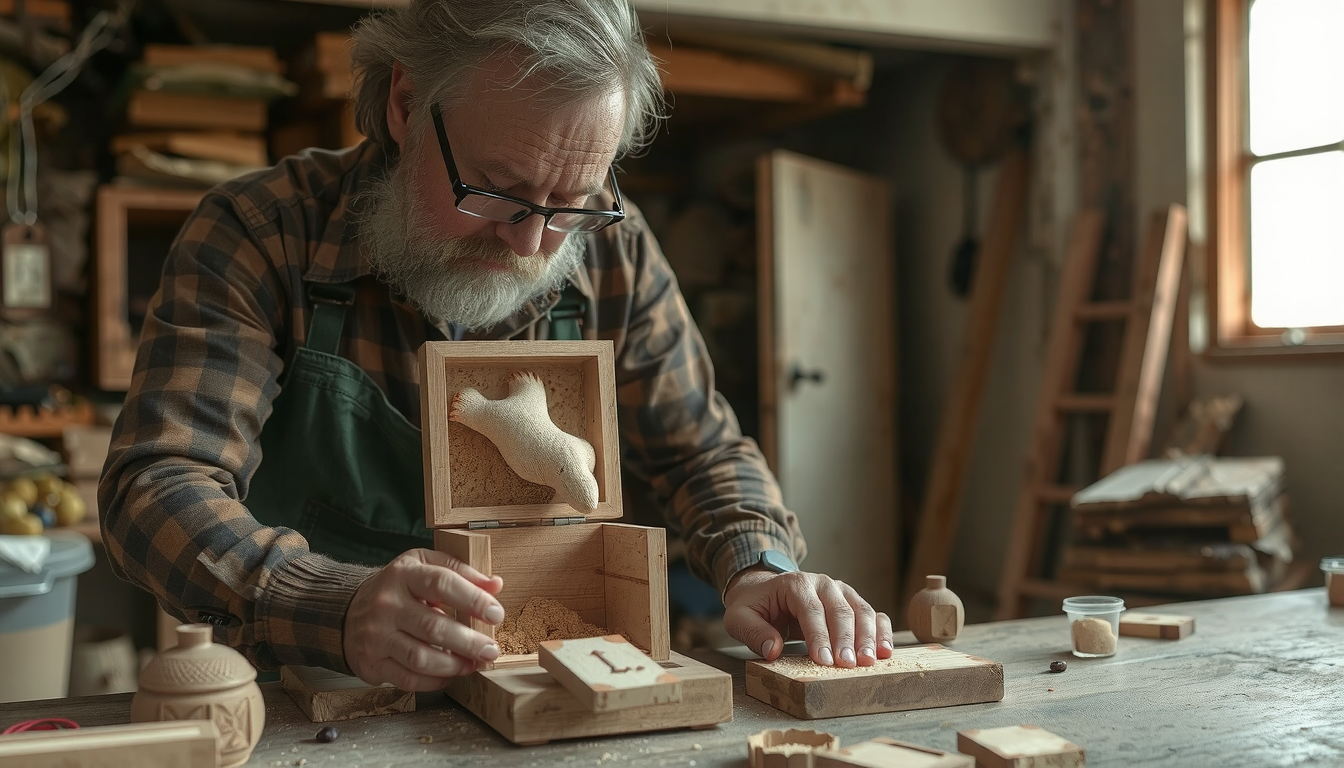
Now, you can start applying a finish. The finish will serve to protect the wood and certify your piece’s quality. A simple wipe-on polyurethane or Tung oil is best for starters. Simply, a light coat should be applied; a clean cloth is perfect for that. It should then be allowed to dry, and finally, a light sand should be done before the second coat.
Touch It Up with the Interior and Hardware
The Chief is ready. The items are the ones that make it unique. What makes this jewelrybox valuable is your personal taste. You can also learn how to make wood jewelry boxes that make you feel good.
Lining Your Box and Adding Dividers
The inside of the box lined with a smooth fabric is the look of a professional. Felt or velvet are both suggested materials. It also offers safety to the jewelry inside. A spray adhesive for example is an excellent option to fix the fabric. Tape along the top edges of the box is essential to avoid glue overspray. Air bubbles can easily be removed by a credit card as you press down the fabric.
To make it even plusher, you can use better quality materials. If you’re interested in places where you can get bulk materials, supply sources of velvet jewelry boxes wholesale can be a great resource for premium fabrics.
You can easily create simple dividers as well. Use thin strips of the same wood or a different contrasting one and size them so they fit neatly into the box. This will create designated areas for rings and earrings.
Selecting and Installing Fixtures
The hardware is the jewelry of your jewelry box. Attach the lid using small butt hinges, which are straightforward and effective.
To install them, you need to carefully mark where they will go. Be sure to mark both the back of the box and the lid. In order to make it flush and clean, you will need to make a shallow cut for the hinge to sit in. This is known as a mortise. You can use a sharp chisel to carefully remove a very thin layer of wood. You can easily find simple guides on installing hardware that will guide you through this process.
When to DIY vs. When to Buy: Exploring Professional Options
A project which is a DIY job has a high sense of fulfillment. The object you make is unique. The learning process is also very rewarding. Making a wooden jewelry box is a good example of a project you can do but sometimes there are cases where you need a different approach.
Where a unique occasion is Congratulating someone or complex designs are concerned, you may opt for a manufactured product. In the case of needing for a high-grade finish or elaborate details, a production-oriented jewelry box manufacturer definitely can deliver excellent results. A specialized jewelry box supplier which has different styles and materials is the perfect destination to find your dream piece.
Frequently Asked Questions (FAQ)
What is the best wood for a beginner making a jewelry box?
For absolute beginners, pine is very forgiving and affordable. For a step up in quality that’s still easy to work with, we recommend poplar or cherry. They have a finer grain and finish beautifully.
Can I make a wooden jewelry box without a table saw?
Absolutely! You can achieve excellent results with a quality hand saw. A Japanese pull saw works well. Use it with a miter box for accurate 45-degree cuts. It requires more patience and practice. But it is a very traditional and rewarding method.
How do I get a really smooth finish on my jewelry box?
The secret is sanding in stages. Start with a medium grit (like 120). Then move to a fine grit (220). For an extra-smooth feel, finish with a super-fine grit (320 or 400). Always sand with the grain, not against it. Wipe the surface clean between grits.
What’s the easiest way to line the inside of the box?
The simplest method is to cut pieces of stiff cardstock. Make them fit the bottom and sides. Wrap them in your chosen fabric (felt or velvet). Then glue the wrapped panels into the box. This avoids the difficulty of gluing fabric directly into tight corners.
How can I make my jewelry box more unique?
Personalization is key! Consider adding a wood-burned initial on the lid. You could use a contrasting wood for spline keys in your miter joints. Try adding small brass feet. You could create a custom-shaped handle instead of a simple knob.
Your Handcrafted Heirloom Awaits
You now have the knowledge and the steps to create a beautiful piece of art. Following this guide will help you create a functional and personal item. It will remain for years’ time. Learning how to do a wooden box is not only about acquiring new skills but also about expressing creativity.
Start with a step to building your heirloom by making it in the garage workshop.