The feeling of actually making something with your own hands is just wonderful. The happiness of making a handmade gift or personal item just cannot be described. It is a project that looks nice and is functional at the same time.
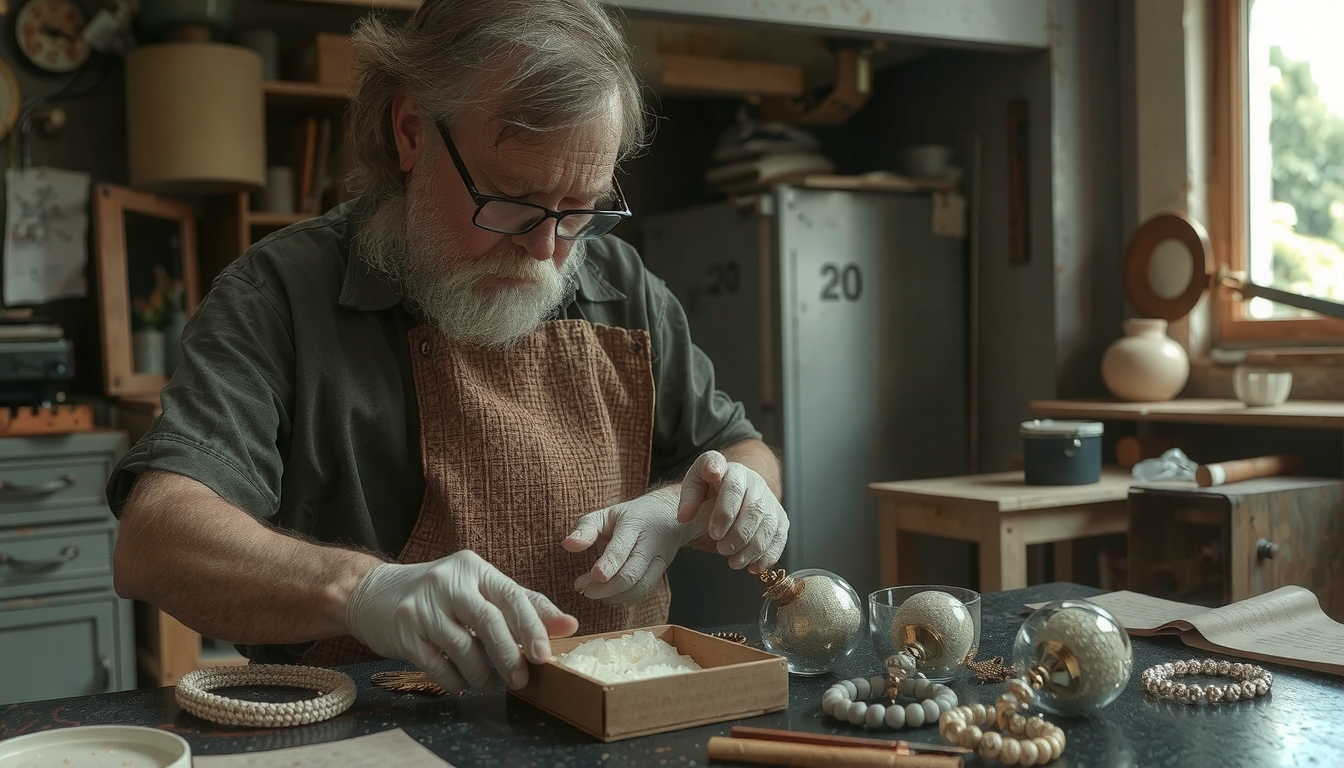
If you are wondering ‘how to make a jewelry box?’, you have come to the right place. This guide is meant for every beginner who wants to accomplish sewing, decorating, and more. We will prove to you that it is easy and fun to build a jewelry box.
We will talk about the planning phase and the materials needed. Then, we will move on to building, finishing, and personalizing it. This guide is about a simple, elegant box that needs basic skills. Anyone can master the skills needed for a jewelry box.
Step 1: Planning Your Ideal Jewelry Box
Well-organized work is the secret of every successful woodworking project. Investing time into planning right now will prevent mistakes later on. The design is the first thing we will talk about before we even start cutting wood.
Designing Your Sketch
A rough sketched drawing should be your starting point. There is no need to be an artist at all. Just draw a simple box shape and record the measurements: length, width, and height.
Think about what you would like your jewelry box to keep. Would it be for rings, long necklaces, or thick bracelets? This will help you to find out if you need to put small sections or if one big compartment will be enough. In this guide, I will focus on a simple lift-lid box. It is a great entry-level project.
Selecting the Suitable Wood
The choice of wood will determine how your project looks, feels, and how difficult it will be to build. There are two main groups of woods: softwoods and hardwoods. Softwoods like pine are easy to cut. But, hardwoods like oak are more durable and require more work.
You will find a simple table below which will help you decide:
| Wood Type | Beginner Friendliness | Cost | Look & Feel |
|---|---|---|---|
| Pine | High (soft, easy to cut) | Low | Rustic, light color |
| Poplar | High (easy to work, paints well) | Low-Medium | Utilitarian, greenish tint |
| Oak | Medium (strong grain, durable) | Medium | Classic, heavy, traditional |
| Walnut | Medium (beautiful color) | High | Elegant, rich, dark |
Deciding on Joinery
Joinery is the process of connecting the wood pieces. For a beginner making a jewelry box, use simple and solid joints.
- Butt Joints: It is the simplest joint. One wood piece is straight across from the other wood piece. It is not the strongest type but is sufficient for a simple box.
- Miter Joints: These joints meet at a 45-degree angle and make perfect, smooth corners. This is the joint we will use in our guide.
- More complicated joints like rabbits and dovetails are lovely to see in future projects.
Step 2: Collecting the Tools & Materials
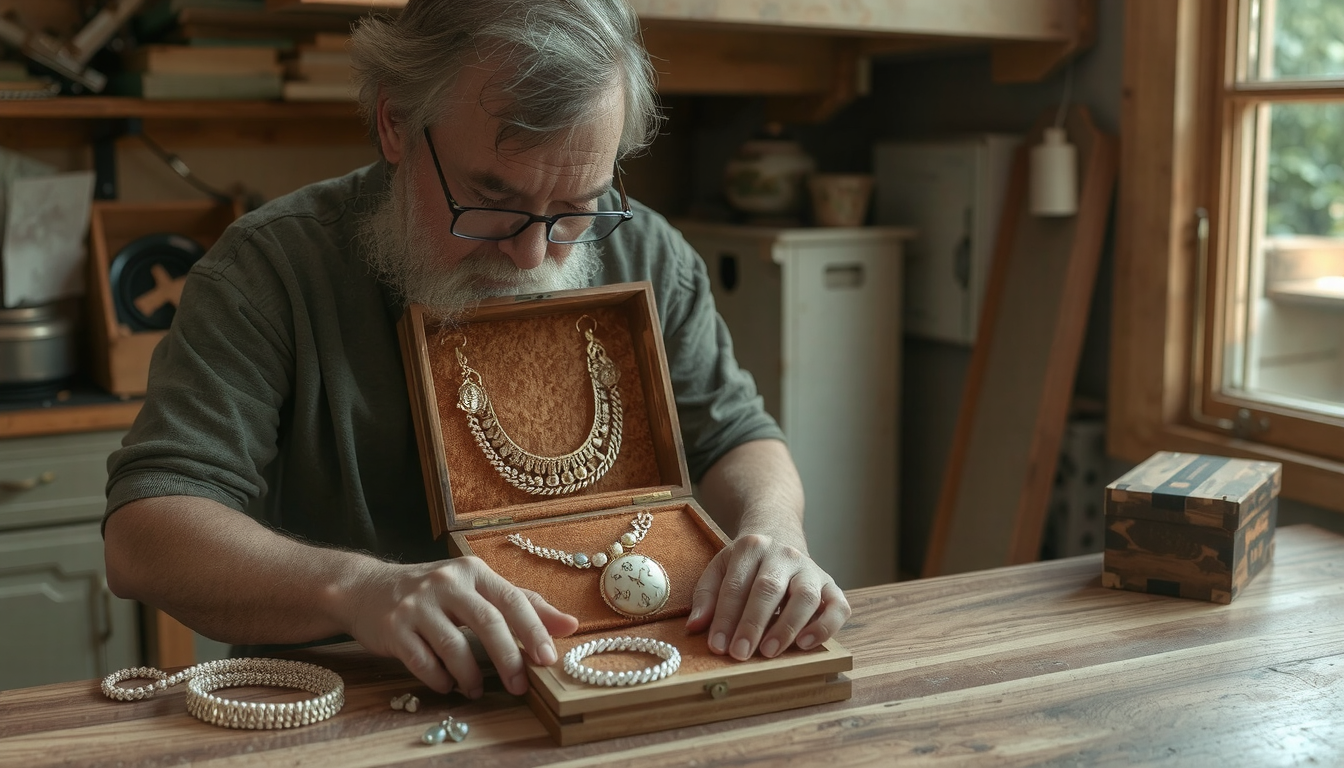
It is so much easier to work efficiently and have fun if you have everything in place before you begin. Below is a list of what you need. It allows you to check what you already have and what you might need.
Required Materials
- Wood: A board of your selected wood. A 1″x4″ board which is 4 feet long is perfect.
- Plywood: A small piece of 1/4″ thick plywood for the top and bottom panels.
- Wood Glue: A bottle of good quality PVA wood glue.
- Sandpaper: A few sheets of different grits like 120, 180, and 220.
- Hardware: Two mini hinges and an optional latch or clasp.
- Finish: Finishing oil (like Tung or Danish oil) or varnish.
The Toolbox – Essential vs. Upgrades
You can still create an attractive box using only a few basic hand tools. Power tools add just the advantage of speed in the job.
Basic Hand Tools:
- Tape Measure & Pencil
- Hand Saw (A Japanese pull saw gives very clean cuts)
- Miter Box (This will guide your hand saw to the perfect 45-degree angle)
- Clamps (A band clamp, or four corner clamps for the box works best)
- Chisel (A sharp 1/2″ chisel for fitting the hinges)
Optional Power Tools (If Available):
- Table Saw or Miter Saw
- Orbital Sander
- Router
Step 3: How to Build a Jewelry Box in 7 Simple Steps
This is the moment when your planning is turned into a real material object. We will lead you through the construction step by step. Keep in mind the saying: “measure twice, cut once.” There is a joy in making a clean, accurate cut.
1. Cut the Box Sides
Employ your hand saw and miter box to make four sides of your box. Each end of each piece should be cut at a 45-degree angle. The two opposing sides should be exactly the same length. For instance, you will have two short sides and two long sides.
2. Cut Out the Grooves for Top & Bottom
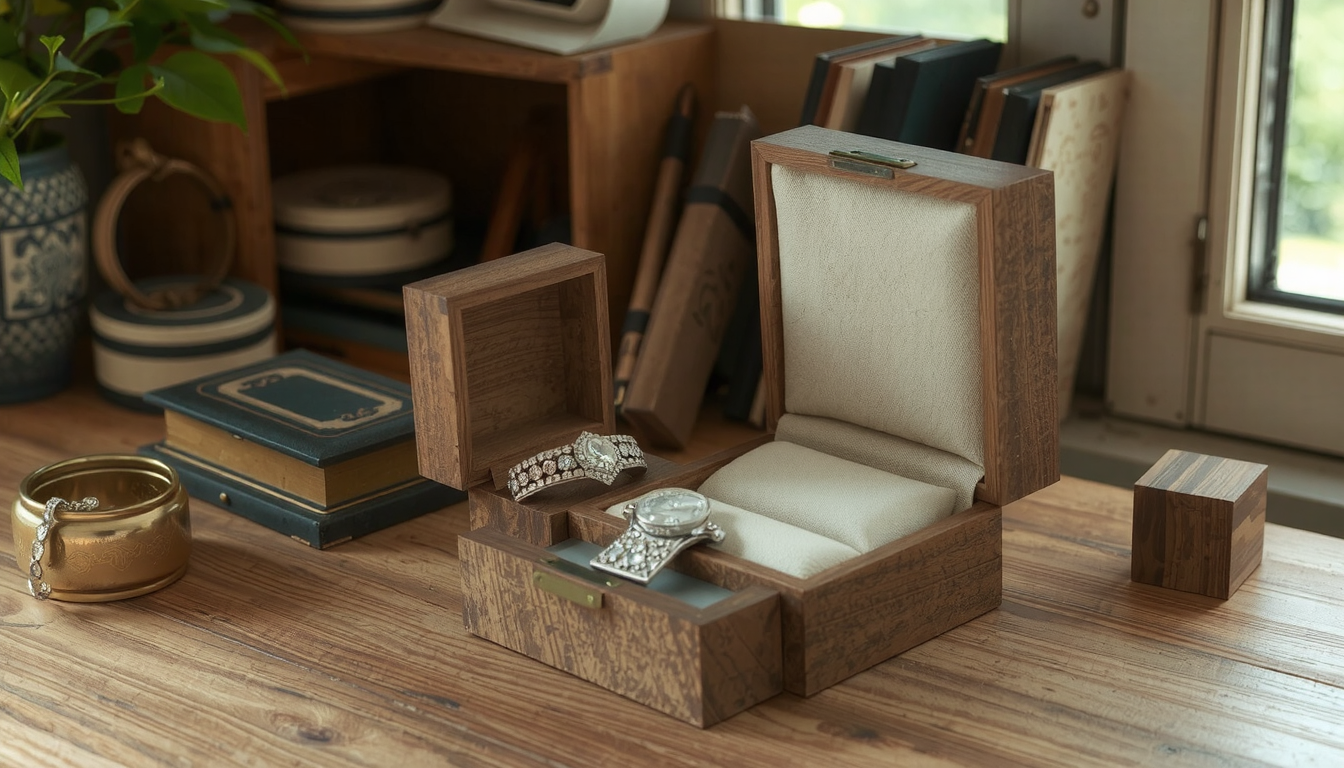
The next step is to cut a shallow groove on the inside face of each side piece to make the top and bottom panels stay in place. The table saw is one machine that can help you do this, however, you can also do it with a hand saw and chisel carefully. The groove should be 1/4″ deep and 1/4″ wide.
3. Cut the Top & Bottom Panels
After you have your four pieces cut, try a “dry fit” by taping them together. Measure the inside area where the grooves are. Take your 1/4″ plywood and cut it according to those measurements. The panels run in the grooves tightly.
4. Glue-Up and the Process of Assembly
It is time to assemble the box. Apply a thin layer of wood glue on all the angled edges. Insert the top and bottom plywood panels into the grooves of one of the long sides. Then, bring up the other sides as if folding the box with your hands.
Securing the box with a band clamp or corner clamps is the best method. Be sure that all corners are right-angled. Use a wet cloth to wipe off any glue that seeps out. Tend to let the glue dry completely, usually for several hours or overnight.
5. Separate the Lid from the Box
This is the magic step that creates a perfectly matched lid. After all the glue is fully dry, you will cut the box top off. This can be done on a table saw where the fence is set and the blade height is adjusted. Or, you can do that with a handsaw very carefully. As a popular and effective method detailed by many woodworkers, you cut all four sides approximately 1 inch from the top. This separates the box into a base and lid that fit together perfectly.
6. Sanding for a Smooth Finish
Sanding can elevate any project to a professional level. Begin with low grit sandpaper, for example, 120-grit sandpaper, to cloud out the saw marks and even the joints. Then move onto 180-grit. Finally, use 220-grit paper to get a silky-smooth surface. Always sand along the grain of the wood.
7. Install the Hardware
To install the hinges, you need to cut shallow recesses so the hinges sit flush with the back of the box. Carefully trace the hinge outline with a pencil. Use a sharp chisel to remove a thin layer of wood inside the lines. Then, screw the hinges into place to connect the lid and box. Attach any clasp or latch to the front the same way.
Step 4: Finishing & Personalizing Your Creation
This ultimate step is the way of making a jewelry box your very own. A fine finish will help protect the wood and enhance its natural beauty. Touches of personality will make it truly unique.
Applying the Right Finishing Coat
There are a number of finishing options available for your box. Each of them offers a unique look and a different level of protection.
- Tung Oil or Danish Oil: They are both just a cloth away to you. They will soak into the wood and provide a natural, warm glow that shows off the grain.
- Polyurethane/Varnish: This creates a tough, protective film on the surface. It offers more protection against scratches and moisture.
- Paint: If you used a wood type like Poplar then paint can offer a modern, colorful look.
Lining the Interior for a Touch of Luxury
The inner lining of a soft fabric will protect the jewelry and will also give a luxurious feeling to the box. Great fabric options are felt and velvet. You can cut the fabric to fit the shorter panel and spray adhesive to attach it cleanly.
For a perfectly professional finish without tricky cutting, sourcing materials can be a great idea. Some wholesale suppliers of velvet jewelry boxes provide high-quality fabric inserts that can be altered for a DIY project.
Great Ways to Personalize It
Here are some suggestions you can embrace in personalizing your box:
- Wood Burning (Pyrography): Use a simple wood-burning tool to add a name, special date, or simple design to the lid.
- Simple Inlay: Cut a little shape and glue it to a different-colored wood piece.
- Custom Dividers: Make simple, removable dividers from thin wood to create sections inside your handmade jewelry box.
When DIY Isn’t an Option: Selecting a Quality Jewelry Box
We appreciate that not everyone is equipped with the time or tools to carry out a DIY task. Should you choose that making a jewelry box is not for you, it is still possible to find an attractive, well-crafted piece.
When buying look for solid wood construction and clean joinery at the corners. Take a look at the hinges if they are smooth and the lid if it fits right. A quality lining is also a sign of excellent craftsmanship. If you want a superior product then you should opt for a trustworthy jewelry box manufacturer who has skills in the field. You can select from a wide variety of styles by searching through a dedicated jewelry box supplier which is a great starting place.
Go Further
Having learned how to make a jewelry box is an essential skill, and you might want to try your hand at more difficult designs. There are many ways to develop your skills.
You may try adding sliding trays or small drawers to your next box. Or you may try more decorative joinery. Learning to cut box joints or mastering dovetail joints can help you. You can also look for new ideas in a more advanced plan of a multi-drawer box detailed here.
FAQ: Your Jewelry Box Questions Answered
Here are some of the frequently asked questions you might have when starting your project.
What is the best wood for a beginner to make a jewelry box?
Poplar or Pine are perfect candidates. They are budget-friendly, soft, and easy to cut and sand. If you should color the box then Poplar is a better choice. It has a smoother look with minimal visible grain and it takes paint well.
How long does it take to make a simple jewelry box?
For a beginner, a simple lift-lid box can be completed over a weekend. This allows for about 3-4 hours of cutting and assembly on the first day. The second day would involve another 2-3 hours for sanding, finishing and installation of hardware. This time includes glue drying.
Can I make a jewelry box without a table saw?
Definitely yes. The entire guide has been written with this in mind. An excellent hand saw and miter box are enough to make the angled cuts necessary for the box sides. It will take a little longer and require more patience, yet the outcome will be rewarding.
How do I get a professional-looking finish?
The key to a fine finish is in the sanding. Do not miss any grit. Sand thoroughly with 120-grit, then 180-grit, and finally 220-grit paper. To achieve an even smoother surface, sand lightly with very fine-grit paper (like 320 or 400) between each coat of your chosen finish, like oil or varnish.
What is the simplest way to line the inside of the box?
The simplest way is to use self-adhesive felt sheets. These can be found in most craft stores. Just measure cut them to the right size, and press them into place inside the box. If you prefer a more traditional method, just use spray adhesive on the wood panels. Carefully apply the felt or velvet and cut any extra with a sharp craft knife.